
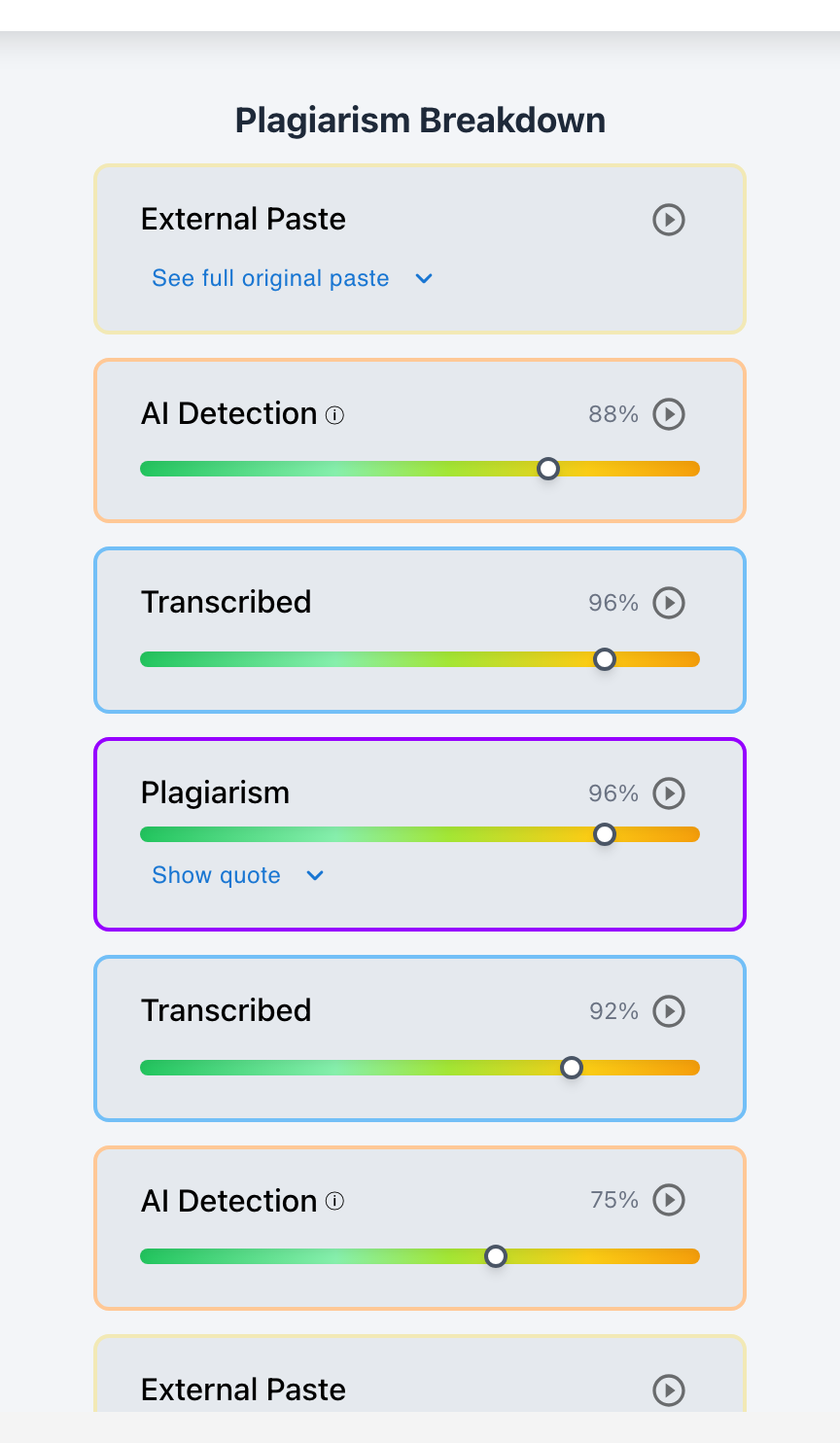
Department chairs can compare writing performance across classes by leveraging Checkmark's Department Analytics Dashboard—aggregating standardized rubric criterion scores, active keyboard drafting hours, formative revision lift, and integrity metrics across all course sections in a unified visual interface.
For department chairs and instructional coaches, ensuring equity across multiple sections of the same course (such as 9th Grade English, AP US History, or Biology Lab Reports) is a constant challenge. Without centralized data, department heads cannot identify grading disparities: Is Teacher A's class struggling with thesis development, or is Teacher A simply grading harsher than Teacher B? Are students in Period 3 drafting over 4 days while Period 6 is pasting completed essays the night before? Checkmark Analytics gives department chairs the objective data needed to drive collaborative Professional Learning Communities (PLCs) and elevate writing outcomes across all classrooms.
Below is a comprehensive guide for department chairs on analyzing cross-class writing performance.
Checkmark Plagiarism powers department analytics by pairing autograding with essay writing playback, AI detection, plagiarism detection, and integrations with Canvas and Google Classroom.
The 4 Cross-Class Comparison Dimensions
1. Standardized Rubric Criterion Distributions
Compares performance row-by-row (Thesis, Evidence, Organization, Conventions) across all sections to identify common instructional gaps.
2. Active Drafting Duration & Effort
Monitors median active typing time across classes: identifying whether students are investing 3.5+ hours of drafting or completing essays in short bursts.
3. Formative Draft Revision Lift
Measures the point improvement between Draft 1 and Final Submission across teachers, highlighting which feedback strategies drive the greatest student revision.
4. Integrity & Paste Anomaly Comparison
Tracks similarity rates, AI scores, and clipboard paste volumes across sections to ensure consistent enforcement and spot prompt vulnerabilities.
How Cross-Class Analytics Elevates Department PLCs
Transforming essay evaluation from isolated grading into a collaborative departmental inquiry unlocks proven benefits:
- Eliminating the "Tough Grader" Disparity: Standardizing rubrics in Checkmark ensures that students across all sections receive equitable, calibrated scoring.
- Targeted Common Assessments: If data shows that all 9th-grade sections struggle with "Evidence Analysis" (scoring 65% average) while excelling in "Organization" (90%), the department can develop a targeted lesson on evidence integration.
- Celebrating Effective Teaching Practices: If Teacher C's students show a 25% revision lift between drafts, Teacher C can share their feedback strategies during department meetings.
Read more in how Checkmark writing process analysis works.
Comparison: Siloed Classroom Grading vs. Checkmark Department Analytics
Siloed Classroom Grading (No Cross-Class Data)
- Department chairs have no visibility into grade distributions.
- Uncalibrated scoring leads to student and parent frustration.
- No way to identify department-wide skill deficiencies.
- PLCs rely on anecdotal impressions rather than data.
Checkmark Department Analytics (Transparent Equity)
- Unified dashboard comparing rubric criteria across teachers.
- Tracks true active drafting hours and revision depth.
- Identifies common writing weaknesses for shared PD.
- Guarantees grading equity for every student across sections.
A 5-Step Department Chair Protocol for Cross-Class Reviews
Department Chair Review Protocol:
- 1. Attach standardized master rubrics from the Checkmark Rubric Library across all course sections.
- 2. Open the Department Overview Dashboard in Checkmark after major assignment deadlines.
- 3. Compare criterion score distributions and identify the lowest-performing rubric row.
- 4. Review active drafting hours and revision lift metrics across sections.
- 5. Lead a collaborative PLC meeting to discuss curriculum adjustments and share best practices.
How Checkmark Plagiarism Powers Departmental Analytics
Checkmark Plagiarism combines **AI detection, essay writing playback, static AI detection, plagiarism detection, autograding, and Canvas/Google Classroom integrations** to make departmental collaboration, equity, and performance tracking effortless.
Frequently Asked Questions
How can department heads view writing performance across all sections?
Through the Checkmark Department Analytics Dashboard, which aggregates rubric criterion scores, drafting hours, and revision lift across all teachers.
Can department chairs see specific rubric row breakdowns?
Yes. Checkmark displays comparative graphs for every rubric criterion (e.g., Thesis, Evidence Analysis, Structure, Conventions) across all sections.
What is 'formative revision lift'?
It is the measurable point improvement between a student's initial first-draft diagnostic and their final essay submission after revising.
How does cross-class tracking help eliminate grading disparities?
By comparing score distributions across teachers, department chairs can identify and calibrate harsh or lenient grading scales to ensure fairness.
Can department chairs track student drafting time across classes?
Yes. Checkmark displays median active typing hours and backspace rates for every teacher's section.
How does Checkmark Plagiarism integrate with Canvas LMS?
Checkmark provides district-wide LTI 1.3 deployment, SpeedGrader sidebar embeds, two-way grade passback, and centralized administrator dashboards.
Is student identifiable data protected in department dashboards?
Yes. Dashboards provide aggregated, anonymized comparative trends in full compliance with FERPA regulations.
How can department chairs use this data in PLC meetings?
Teams can analyze which writing skills need reinforced instruction and celebrate teaching strategies that drove high revision lift.
Does Checkmark support standardized AP rubrics across classes?
Yes. Checkmark includes pre-built templates for AP DBQs, LEQs, SAT/ACT writing rubrics, and state writing standards.
Why is data-driven department leadership essential?
Because objective writing analytics remove guesswork, align teaching standards, and ensure every student receives high-quality writing instruction.
Collaborative Leadership That Drives Student Growth
Empowering writing teachers begins with transparent, actionable insights. By comparing writing performance and process analytics across classes with Checkmark Plagiarism, department chairs can foster collaborative excellence, ensure grading equity, and inspire student writing mastery.
Checkmark Plagiarism supports this comprehensive approach with AI detection, essay writing playback, static AI detection, plagiarism detection, autograding, and integrations with Canvas and Google Classroom.
See how Checkmark pairs department analytics with multi-signal detection to compare writing performance across classes. View a sample report or request a demonstration.