
No. Certified enterprise educational platforms like Checkmark Plagiarism maintain a strict, legally binding Zero-Training Policy—guaranteeing that student essays, writing history logs, and teacher feedback are never used to train public or proprietary AI models.
A growing concern among parents, educators, and school boards is the unauthorized commercialization of student intellectual property. When students submit personal essays, creative stories, or academic research, they hold legal copyright over their work. Consumer AI tools and unvetted free scanning websites frequently include predatory terms of service that grant the company rights to use uploaded text to train, fine-tune, and monetize artificial intelligence algorithms. For schools, partnering only with vendors that contractually prohibit AI training on student writing is essential.
Below is a comprehensive guide on how student writing is protected and what contractual safeguards schools must require.
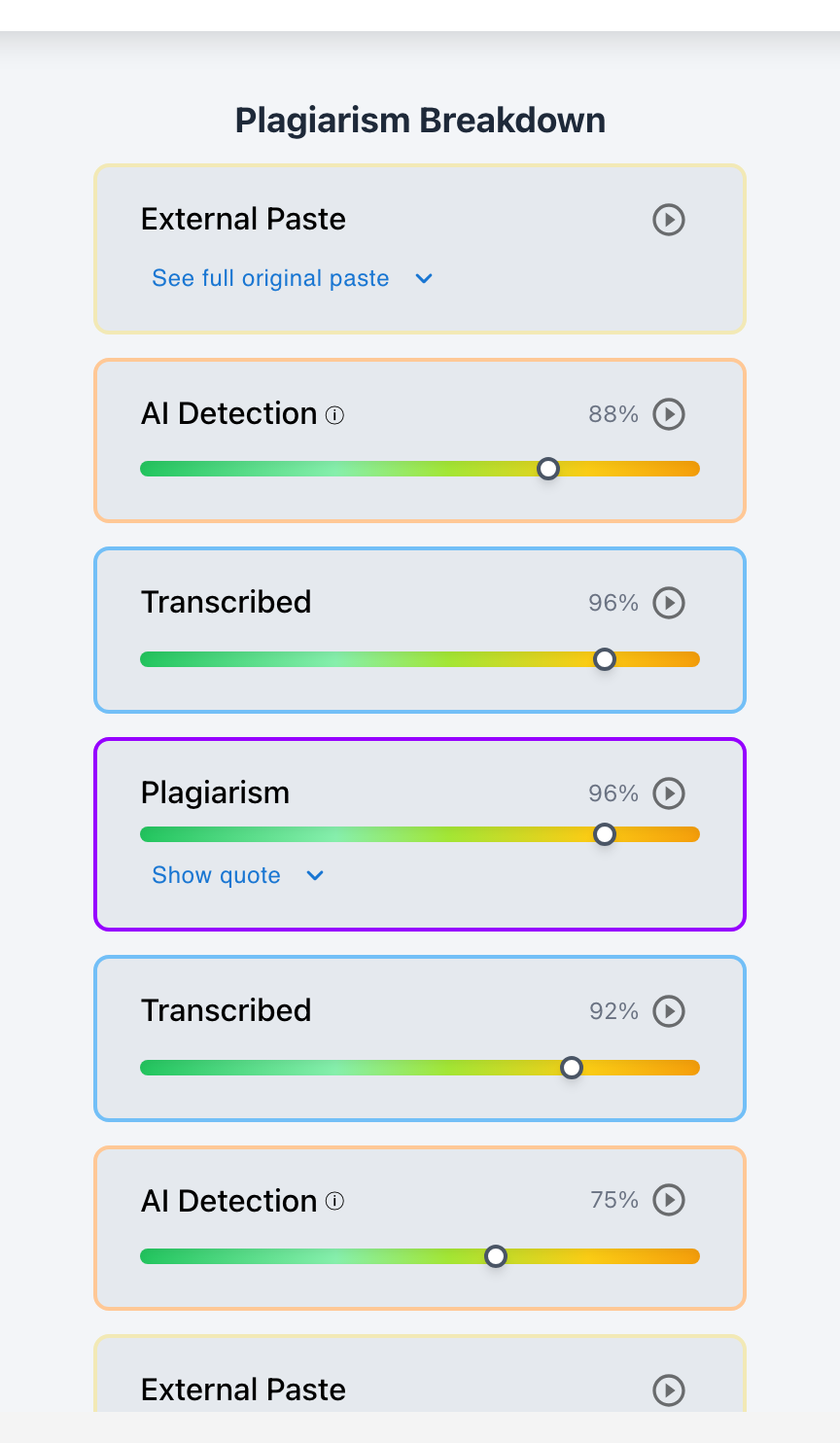
Checkmark Plagiarism enforces zero-training protections while pairing AI detection with essay writing playback, plagiarism detection, autograding, and integrations with Canvas and Google Classroom.
The 4 Legal Safeguards of a Zero-Training Vendor
1. Explicit Non-Training DPA Clause
The vendor signs a binding Data Privacy Agreement explicitly promising that student submissions will never be ingested into AI training sets.
2. Complete Student IP Sovereignty
All intellectual property rights remain 100% with the student and school district; the vendor receives zero ownership or commercial reuse licenses.
3. Sub-Processor Zero-Retention Guarantees
Ensures that any underlying cloud infrastructure or API sub-processors (e.g., AWS, Azure) also enforce zero-retention and non-training standards.
4. Isolated Multi-Tenant Infrastructure
Student essays are stored only within your school's private institutional tenant for peer matching, completely air-gapped from other organizations.
The Hidden Dangers of Consumer "Free" Checkers
Free online tools use student essays as their primary product:
- Data Scraping & Harvesting: Free websites aggregate millions of student essays to build massive training corpora for commercial LLMs without parental consent.
- Re-Selling Student Research: Some disreputable tools feed student essays into online paper mills and essay databases, causing future submissions by that student to flag as plagiarized.
- FERPA Non-Compliance: Free consumer tools do not sign District Data Privacy Agreements, exposing schools to federal privacy compliance violations.
Read more in how Checkmark writing process analysis works.
Comparison: Consumer AI Tools vs. Checkmark Zero-Training Guarantee
Consumer AI Tools & Free Scanners (Predatory)
- Terms grant rights to train commercial AI models.
- Student writing ingested into public training sets.
- No student copyright or FERPA protections.
- Student essays may be exposed in future AI outputs.
Checkmark Zero-Training Guarantee (Certified Safe)
- Strict contractual ban on using student text for training.
- Student retains 100% intellectual property ownership.
- Fully compliant with FERPA, COPPA, and CSPC.
- Encrypted multi-tenant isolation within your school.
A 5-Step Procurement Protocol for Zero-Training Verification
Zero-Training Procurement Checklist:
- 1. Ask the vendor: "Do you use customer data to train, fine-tune, or improve any AI models?"
- 2. Require the vendor to sign the standard National Data Privacy Agreement (NDPA) Exhibit G.
- 3. Verify that the vendor's sub-processors (cloud hosts, OCR engines) also enforce non-training terms.
- 4. Ensure student submissions are encrypted at rest with keys unique to your institution.
- 5. Prohibit staff from using non-contracted consumer AI detection websites on school devices.
How Checkmark Plagiarism Powers Ethical AI Standards
Checkmark Plagiarism combines **AI detection, essay writing playback, static AI detection, plagiarism detection, autograding, and Canvas/Google Classroom integrations** while upholding the highest ethical and legal standards of student data privacy.
Frequently Asked Questions
Does Checkmark use student writing to train AI?
No. Checkmark has a strict, legally binding policy: student writing is never used to train, retrain, or fine-tune artificial intelligence models.
Who owns the copyright to a student's essay in Checkmark?
The student retains 100% intellectual property rights. Checkmark acts strictly as a secure data processor on behalf of the school district.
What is a Zero-Training Policy?
A contractual guarantee that an edtech vendor will not use submitted student coursework, text logs, or grading notes to train machine learning algorithms.
Can ChatGPT generate text that includes a student's private essay?
If an essay was pasted into a free consumer tool with training enabled, it could be ingested. Using Checkmark prevents this, ensuring text is never exposed to public AI.
How does Checkmark isolate student data between schools?
Checkmark uses dedicated tenant isolation: student submissions and private repository matches remain strictly within your school district's boundary.
How does Checkmark Plagiarism integrate with Canvas LMS?
Checkmark provides certified LTI 1.3 integration, SpeedGrader sidebar embeds, two-way grade passback, and single sign-on (SSO).
What does FERPA say about AI training?
FERPA requires schools to maintain direct control over educational records; using student work to train commercial products without consent violates federal law.
How can school districts verify a vendor's privacy claims?
By reviewing the vendor's SOC 2 Type II audit report, HECVAT security assessment, and requiring a signed Student Data Privacy Agreement (DPA).
Can teachers use free AI detectors legally?
In most districts, using unapproved consumer AI detectors that lack signed DPAs is a direct violation of district policy and student privacy laws.
Why is Checkmark the trusted choice for privacy-conscious schools?
Because Checkmark combines industry-leading detection accuracy with uncompromising legal protections, ensuring student work remains private and secure.
Defending Student Intellectual Property
Student creativity and intellectual labor must be honored and protected. By choosing Checkmark Plagiarism with its ironclad zero-training guarantee, school leaders ensure that student writing remains the sovereign property of the student and school—never raw material for commercial AI.
Checkmark Plagiarism supports this comprehensive approach with AI detection, essay writing playback, static AI detection, plagiarism detection, autograding, and integrations with Canvas and Google Classroom.
See how Checkmark pairs zero-training data privacy with multi-signal detection to protect student essays inside your LMS. View a sample report or request a demonstration.