
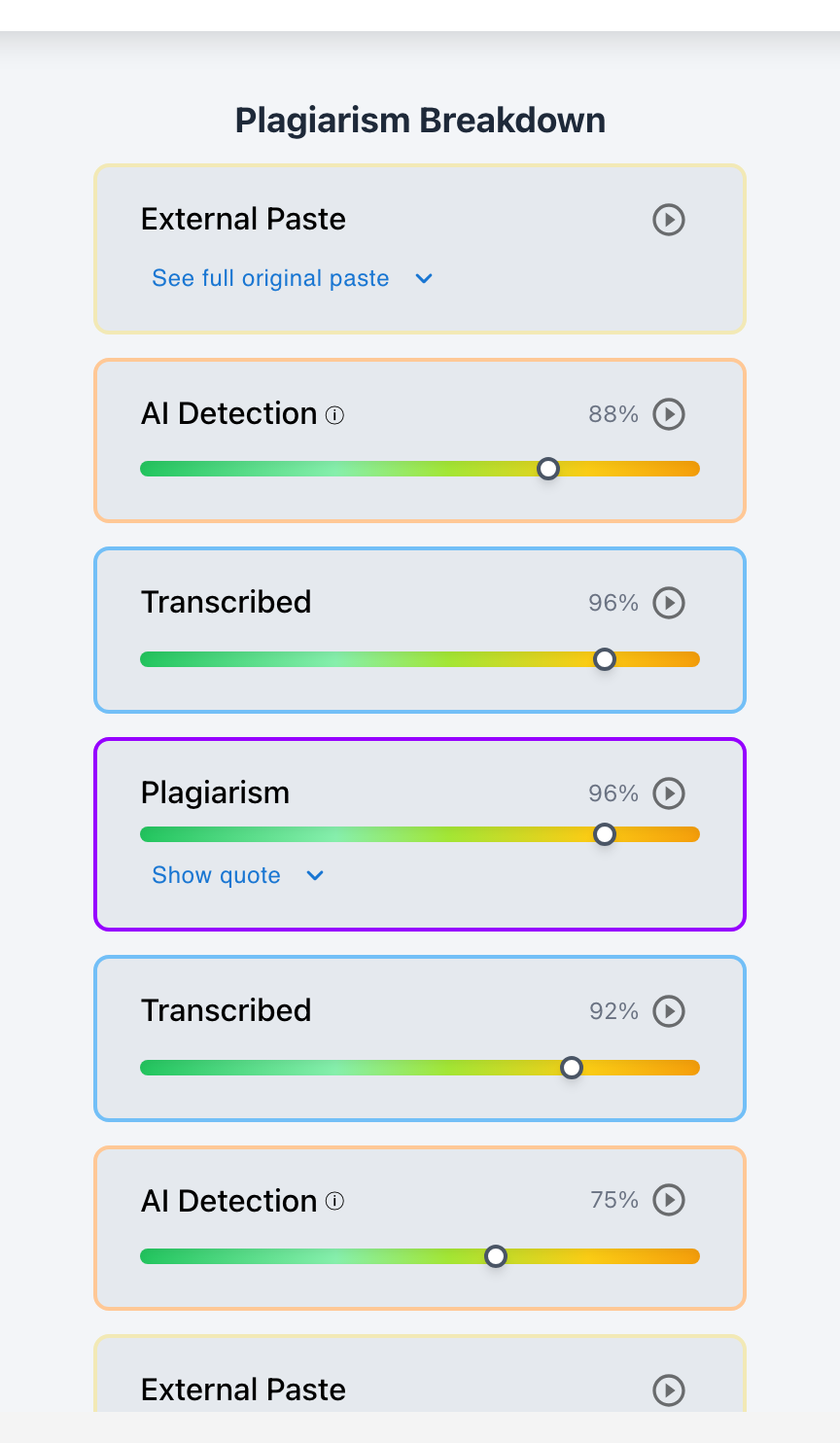
A comprehensive school AI misconduct policy must include four core components: 1) Clear Definitions distinguishing Permitted AI Assistance (brainstorming, grammar checking) from Prohibited AI Authorship (generating prose, uncredited paraphrasing); 2) Mandatory AI Disclosure and Attribution Rules; 3) Multi-Signal Evidentiary Standards (mandating keystroke writing playback and citation verification before any disciplinary action); and 4) A Tiered Sanctions Framework emphasizing formative learning for first-time infractions and formal escalation for repeat offenses.
The sudden rise of generative AI tools like ChatGPT has rendered traditional academic integrity policies obsolete. Vague handbook phrases such as "Students must not use unauthorized electronic assistance" provide no practical guidance when students use AI for research ideation or grammar refinement. Without crystal-clear definitions and fair evidentiary standards, schools face constant friction between teachers, students, and parents. Drafting a modern, comprehensive AI misconduct policy establishes transparent boundaries that nurture ethical digital literacy while fiercely protecting authentic human scholarship.
Below is a complete institutional blueprint and policy template for school boards, administrators, and department chairs.
Checkmark Plagiarism enforces institutional AI policies by pairing AI detection with essay writing playback, plagiarism detection, autograding, and integrations with Canvas and Google Classroom.
The 4 Essential Components of an Institutional AI Policy
1. The AI Traffic Light Definitions
Green (Permitted): Brainstorming, outlining, finding sources.
Yellow (Disclosed): Sentence-level grammar refinement.
Red (Prohibited): Uncredited AI text generation, retyping ChatGPT, or hallucinated citations.
2. Mandatory Disclosure Protocol
Requires students to include an "AI Use Statement" on submissions detailing the specific tools used, prompts entered, and sections affected.
3. Multi-Signal Evidentiary Safeguards
Explicitly states that no disciplinary penalty may be imposed on a single detector score; physical telemetry (writing playback) and citation checks are legally required.
4. Tiered Disciplinary Sanctions
1st Offense: Formative rewrite & academic integrity module.
2nd Offense: Zero on assignment & parent conference.
3rd Offense: Honor Council hearing & course probation.
Model Policy Language for Student & Faculty Handbooks
Verbatim policy text ready for school adoption:
"Academic integrity requires that all submitted student work represents the authentic cognitive effort and original expression of the student author. While generative AI tools may be utilized for exploratory brainstorming or approved editing when explicitly permitted by the instructor, representing AI-generated text as one's own original composition constitutes academic misconduct. Disciplinary findings require corroboration through multi-signal evidence, including writing process telemetry, keystroke verification, and source auditing. Single automated detection scores are inadmissible as sole proof of misconduct."
Read more in how Checkmark writing process analysis works.
Comparison: Outdated Honor Codes vs. Modern AI Policy Blueprint
Modern AI Policy Blueprint (Checkmark Framework)
- Explicit Green/Yellow/Red categorical boundaries.
- Standardized AI disclosure statements required.
- Mandatory multi-signal telemetry (writing playback).
- Tiered, restorative sanctions for first-time infractions.
Outdated Honor Codes (Vague & Unenforceable)
- Vague prohibitions on "unauthorized electronics."
- No guidance on AI grammar tools (e.g., Grammarly).
- Leaves teachers to invent arbitrary detection rules.
- Rigid, punitive zero-tolerance rules that spark lawsuits.
A 5-Step Leadership Protocol for Adopting an AI Policy
AI Policy Implementation Checklist:
- 1. Convene a joint committee of teachers, administrators, and student representatives to review policy draft.
- 2. Adopt the 4-tier AI Traffic Light definitions across all departmental course syllabi.
- 3. Standardize Checkmark Plagiarism as the institution's official multi-signal evidence platform.
- 4. Publish the policy in student handbooks and require signed academic integrity acknowledgments.
- 5. Review administrative integrity dashboards annually to adapt policy to evolving AI technologies.
How Checkmark Plagiarism Powers Policy Enforcement
Checkmark Plagiarism combines **AI detection, essay writing playback, static AI detection, plagiarism detection, autograding, and Canvas/Google Classroom integrations** to provide schools with the complete technological infrastructure required to enforce modern AI policies with total fairness.
Frequently Asked Questions
Should high school policies ban AI completely?
Complete bans are virtually unenforceable and prevent students from developing essential AI literacy; policies should define permissible vs. prohibited use clearly.
What is an 'AI Use Statement'?
A short paragraph submitted with an essay where the student discloses if and how AI tools were used during research, outlining, or editing.
Why must policies forbid single-score AI detector penalties?
Because static detectors carry documented false positive risks; requiring corroborating writing playback telemetry ensures decisions are legally defensible.
How does Checkmark Plagiarism integrate with Canvas LMS?
Checkmark integrates via LTI 1.3, embedding policy compliance banners, submission disclosures, and writing playback directly in Canvas.
What should happen on a student's first AI infraction?
First offenses should be treated formatively: requiring a supervised rewrite, completion of an academic integrity module, and a teacher conference.
Can teachers set custom AI policies for specific assignments?
Yes. Teachers can designate specific assignments as "AI Prohibited (Red)," "AI Assisted (Yellow)," or "AI Exploratory (Green)" in assignment instructions.
How does an AI policy protect students with learning accommodations?
Policies should explicitly allow assistive technologies (e.g., screen readers, speech-to-text, spellcheckers) documented in IEP/504 plans.
How does Checkmark Autograder align with school policies?
Checkmark Autograder incorporates your school's specific policy parameters into rubric feedback, flagging unpermitted AI use automatically.
Can students appeal an AI misconduct ruling under this policy?
Yes. Policies must provide a 5-day appeal window where students can present independent drafting artifacts to an Honor Committee.
Why is policy transparency essential for school culture?
Because clear, transparent guidelines remove ambiguity, build student trust, and create a shared commitment to authentic scholarship.
Clear Expectations for Modern Scholarship
Integrity thrives when standards are clear, fair, and transparent. By adopting a modern AI misconduct policy supported by Checkmark Plagiarism's multi-signal verification platform, schools establish an enduring foundation of academic excellence, ethical technology use, and student trust.
Checkmark Plagiarism supports this comprehensive approach with AI detection, essay writing playback, static AI detection, plagiarism detection, autograding, and integrations with Canvas and Google Classroom.
See how Checkmark powers institutional AI policy enforcement and writing playback. View a sample report or request a demonstration.