
The Higher Education Community Vendor Assessment Tool (HECVAT) is a standardized security and risk assessment framework created by EDUCAUSE, Internet2, and REN-ISAC—used by universities, colleges, and forward-thinking K–12 school districts to rigorously evaluate the cybersecurity, data privacy, and disaster recovery posture of cloud educational technology vendors before contract signing.
When purchasing cloud-based academic integrity software, IT security teams cannot rely on marketing claims alone. The HECVAT provides an objective, standardized questionnaire that forces vendors to document their exact technical controls: from database encryption and access management to sub-processor policies and business continuity plans. Partnering with vendors that maintain a completed, verified HECVAT assessment dramatically accelerates district procurement, ensures FERPA compliance, and minimizes cybersecurity risk.
Below is a comprehensive guide on what the HECVAT is, why it matters, and how educational institutions use it to evaluate vendors.
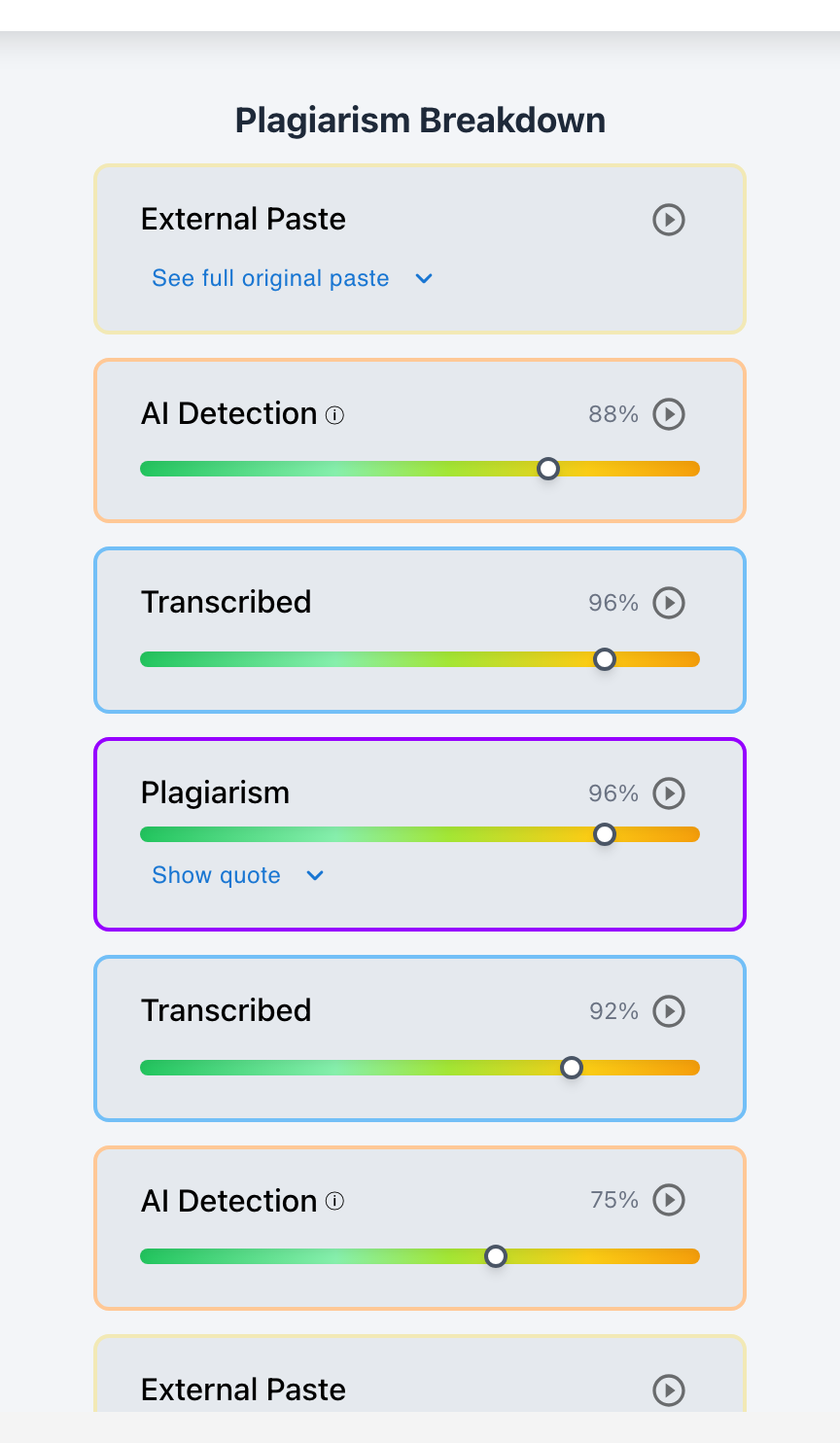
Checkmark Plagiarism provides complete HECVAT documentation while pairing AI detection with essay writing playback, plagiarism detection, autograding, and integrations with Canvas and Google Classroom.
The 4 Core Security Domains Evaluated in HECVAT
1. Information Security Governance
Evaluates administrative controls, security policies, background checks, vulnerability scanning, and annual independent penetration testing.
2. Data Privacy & FERPA Governance
Scrutinizes data ownership, encryption standards (AES-256 / TLS 1.3), non-training AI clauses, and guaranteed data deletion upon contract termination.
3. Application Security & Interoperability
Validates 1EdTech LTI 1.3 Advantage compliance, OAuth 2.0 token security, SAML 2.0 Single Sign-On (SSO), and secure REST API architectures.
4. Disaster Recovery & Uptime SLAs
Reviews automated database failovers, geographic redundancy, 99.9% uptime commitments, and documented Recovery Point Objectives (RPO).
Why HECVAT Is Essential for Modern EdTech Procurement
Requiring a completed HECVAT provides three transformative advantages for school and university procurement:
- Accelerates IT Security Reviews: Instead of making vendors answer custom 100-question questionnaires, IT security teams review the standardized HECVAT format in hours rather than months.
- Uncovers Hidden Sub-Processor Risks: Forces vendors to reveal third-party hosting providers (e.g., AWS, Azure) and proves that sub-processors adhere to identical non-training and encryption standards.
- Guarantees Enterprise Maturity: Startups with immature security practices cannot pass a HECVAT review; having a completed assessment separates enterprise-grade platforms from untested consumer tools.
Read more in how Checkmark writing process analysis works.
Comparison: Unvetted EdTech Vendors vs. HECVAT-Verified Checkmark
Unvetted EdTech Vendors (Unverified Risk)
- Refuses or is unable to provide HECVAT documentation.
- Vague answers regarding student data storage and AI training.
- No third-party penetration testing or disaster recovery SLA.
- Causes procurement delays and exposes districts to cyber liability.
Checkmark Plagiarism (HECVAT-Verified)
- Completed, verified HECVAT available under NDA.
- Full transparency on AES-256 encryption & zero-training policies.
- Certified LTI 1.3 Advantage, SOC 2 Type II, and 99.9% uptime SLA.
- Fast-track security approval for district IT and university CISOs.
A 5-Step Procurement Protocol for HECVAT Reviews
HECVAT Assessment Protocol:
- 1. Request the vendor's completed HECVAT document (Full or Lite version) under NDA.
- 2. Have your institution's CISO or IT Director review sections on Cryptography, LTI 1.3, and FERPA.
- 3. Correlate HECVAT answers with the vendor's latest independent SOC 2 Type II audit report.
- 4. Verify that the vendor maintains a documented 48-hour breach notification SLA.
- 5. Issue procurement sign-off and proceed with LMS deployment.
How Checkmark Plagiarism Powers HECVAT Excellence
Checkmark Plagiarism combines **AI detection, essay writing playback, static AI detection, plagiarism detection, autograding, and Canvas/Google Classroom integrations** while maintaining complete HECVAT documentation and enterprise cloud transparency.
Frequently Asked Questions
What does HECVAT stand for?
HECVAT stands for the Higher Education Community Vendor Assessment Tool—a standardized cybersecurity questionnaire developed by EDUCAUSE, Internet2, and REN-ISAC.
Do K-12 school districts use HECVAT?
Yes. Forward-thinking K–12 school districts increasingly use HECVAT Lite to streamline security assessments and ensure cloud software meets rigorous privacy baselines.
What is the difference between HECVAT Full and HECVAT Lite?
HECVAT Full contains over 250 in-depth security questions for high-risk systems handling confidential institutional data, while HECVAT Lite is an expedited 50-question assessment.
Does Checkmark have a completed HECVAT?
Yes. Checkmark provides verified HECVAT documentation and SOC 2 Type II audit reports to institutional procurement teams under mutual NDA.
How does HECVAT help ensure FERPA compliance?
It explicitly evaluates data ownership, student privacy protections, data minimization controls, and guarantees regarding non-commercialization of student records.
How does Checkmark Plagiarism integrate with Canvas LMS?
Checkmark provides certified LTI 1.3 integration, SpeedGrader sidebar embeds, two-way grade passback, and single sign-on (SSO).
Why is HECVAT better than custom vendor security forms?
Because it is a globally recognized, standardized framework built by higher education cybersecurity experts, eliminating ambiguity and saving weeks of review time.
Does HECVAT verify disaster recovery capabilities?
Yes. HECVAT evaluates backup schedules, geographic server redundancy, failover protocols, and Recovery Time Objectives (RTO).
Is student data encrypted according to HECVAT standards?
Yes. Checkmark enforces AES-256 encryption at rest and TLS 1.3 encryption in transit, exceeding standard HECVAT cryptographic benchmarks.
Why is HECVAT verification critical when procuring AI software?
Because AI software interacts directly with sensitive student intellectual property; HECVAT verification ensures that student data is never harvested or compromised.
Standardized Security for Confident Procurement
Adopting educational software should be grounded in rigorous, standardized security assessment. By requiring verified HECVAT documentation from enterprise partners like Checkmark Plagiarism, educational institutions ensure their cloud ecosystem remains secure, compliant, and resilient.
Checkmark Plagiarism supports this comprehensive approach with AI detection, essay writing playback, static AI detection, plagiarism detection, autograding, and integrations with Canvas and Google Classroom.
See how Checkmark pairs HECVAT-verified security with multi-signal detection to protect student data inside your LMS. View a sample report or request a demonstration.