An LTI 1.3 Plagiarism Checker is an academic integrity tool built on the 1EdTech LTI Advantage open standard—utilizing OAuth 2.0 and OpenID Connect encryption to integrate natively into Learning Management Systems like Canvas, Blackboard, Schoology, and Brightspace with automated roster synchronization, embedded SpeedGrader reports, and two-way grade passback.
For years, educational technology relied on legacy LTI 1.1 connections, which used basic shared secret keys that were vulnerable to security breaches and offered limited functionality. Modern educational institutions now mandate LTI 1.3 (LTI Advantage) as the gold standard for software procurement. An LTI 1.3 plagiarism checker like Checkmark Plagiarism operates directly inside your LMS interface, eliminating external logins, protecting student data privacy under FERPA, and automating the entire grading workflow.
Below is a comprehensive technical and pedagogical guide on what LTI 1.3 means for schools, IT administrators, and classroom educators.
Checkmark Plagiarism is a certified LTI 1.3 platform pairing plagiarism detection with essay writing playback, AI detection, autograding, and native Canvas LMS integration.
The 4 Core Services of LTI 1.3 (LTI Advantage)
1. OAuth 2.0 & OpenID Connect Security
Replaces static shared secrets with dynamic, encrypted asymmetric JSON Web Tokens (JWT), ensuring bank-grade security and full FERPA compliance.
2. Assignment and Grade Services (AGS)
Enables automated, real-time two-way synchronization of numeric grades, letter marks, and granular rubric ratings directly into the LMS Gradebook.
3. Names and Role Provisioning Services (NRPS)
Automatically synchronizes course rosters and permissions—distinguishing between instructors, co-teachers, and students without manual account creation.
4. Deep Linking & Embedded SpeedGrader Views
Allows teachers to configure Checkmark directly within assignment settings and view complete similarity reports directly inside Canvas SpeedGrader.
Why School IT Administrators Mandate LTI 1.3
For district technology directors and university IT coordinators, LTI 1.3 compliance is non-negotiable:
- Elimination of Data Leakage: Legacy LTI 1.1 transmitted data via unencrypted URL parameters. LTI 1.3 ensures all student payloads are signed and encrypted end-to-end.
- Single Sign-On (SSO): Teachers and students never have to remember separate passwords; authentication occurs instantly through their existing LMS credentials.
- Zero Maintenance Overhead: Roster changes, student enrollments, and course additions sync automatically without manual IT CSV uploads.
Read more in how Checkmark writing process analysis works.
Comparison: Legacy LTI 1.1 vs. Modern LTI 1.3 (LTI Advantage)
Legacy LTI 1.1 (Deprecated Standard)
- Uses vulnerable shared secret keys.
- No native gradebook passback or rubric sync.
- Requires opening external browser pop-ups.
- High security risk; non-compliant with modern IT audits.
Checkmark LTI 1.3 Advantage (Modern Gold Standard)
- OAuth 2.0 asymmetric JWT encryption.
- Two-way gradebook passback and rubric integration.
- Embedded directly inside Canvas SpeedGrader.
- 100% FERPA and 1EdTech certified secure.
A 5-Step Administrator Protocol for LTI 1.3 Deployment
District LTI 1.3 Deployment Checklist:
- 1. Obtain Developer Keys from Checkmark Plagiarism for your Canvas root account.
- 2. Paste the Client ID into Canvas Admin → Developer Keys → "LTI 1.3 Advantage."
- 3. Toggle the developer key to "ON" and copy the Deployment ID into Checkmark.
- 4. Add Checkmark Plagiarism under Admin → Settings → Apps for institution-wide availability.
- 5. Teachers can immediately select Checkmark in assignment settings across all courses.
How Checkmark Plagiarism Powers LTI 1.3 Environments
Checkmark Plagiarism combines **AI detection, essay writing playback, static AI detection, plagiarism detection, autograding, and Canvas/Google Classroom integrations** to deliver certified LTI 1.3 interoperability across all major learning management systems.
Frequently Asked Questions
What does LTI stand for in educational software?
LTI stands for Learning Tools Interoperability—a global standard established by 1EdTech to connect third-party educational applications securely with learning management systems.
What is the difference between LTI 1.1 and LTI 1.3?
LTI 1.1 used basic shared keys with limited security, while LTI 1.3 uses OAuth 2.0 encryption, OpenID Connect authentication, and supports advanced grade passback services.
Which LMS platforms support LTI 1.3 plagiarism checking?
Canvas LMS, Blackboard Learn, Brightspace (D2L), Schoology, and Moodle all support certified LTI 1.3 integrations with Checkmark.
Does LTI 1.3 work inside Canvas SpeedGrader?
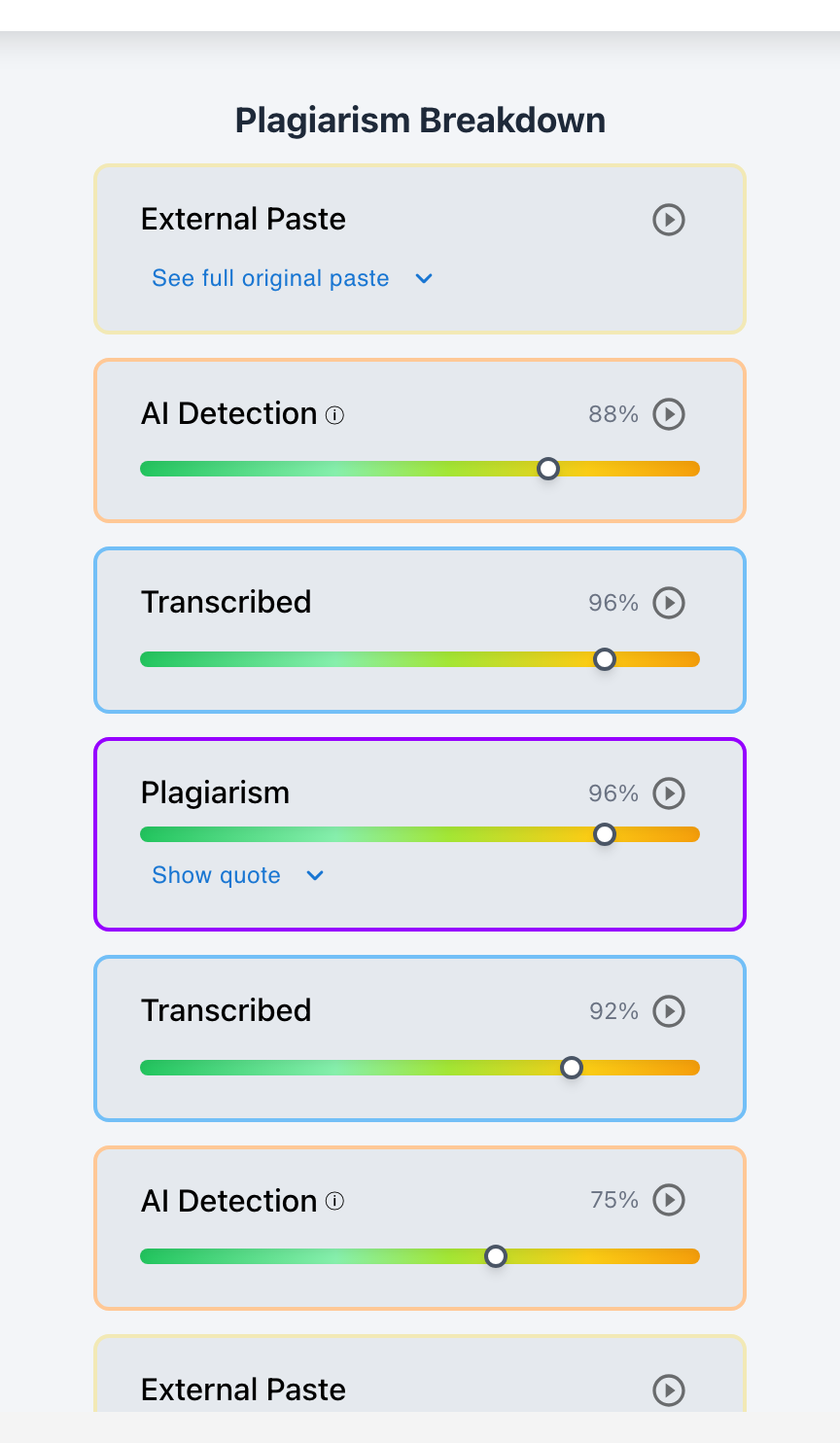
Yes. Checkmark embeds full AI probability scores, plagiarism matches, and video playback replays directly within the Canvas SpeedGrader assessment panel.
Is student data secure with LTI 1.3?
Yes. LTI 1.3 utilizes enterprise JWT encryption and strict OAuth 2.0 tokens, guaranteeing full FERPA compliance and data privacy.
How does Checkmark Plagiarism integrate with Canvas LMS?
Checkmark provides 1-click LTI 1.3 installation, SpeedGrader sidebar embeds, two-way grade passback, and single sign-on (SSO).
Do students need separate login accounts with LTI 1.3?
No. Authentication occurs automatically through their existing school LMS credentials via Single Sign-On (SSO).
How does LTI 1.3 handle grade passback?
Through Assignment and Grade Services (AGS), approved rubric ratings, percentage marks, and feedback comments sync directly into the official LMS gradebook.
How long does LTI 1.3 installation take for a Canvas administrator?
Institution-wide deployment takes under 10 minutes using Checkmark's automated Client ID and Deployment Key configuration.
Why should schools mandate LTI 1.3 for academic integrity tools?
Because LTI 1.3 guarantees enterprise cybersecurity, protects student privacy under federal law, and eliminates manual data entry for classroom teachers.
The Gold Standard for Educational Interoperability
Academic integrity tools should integrate seamlessly into the digital systems schools already trust. By building on certified LTI 1.3 Advantage standards, Checkmark Plagiarism provides administrators with uncompromising cybersecurity and educators with a fast, unified grading experience.
Checkmark Plagiarism supports this comprehensive approach with AI detection, essay writing playback, static AI detection, plagiarism detection, autograding, and integrations with Canvas and Google Classroom.
See how Checkmark pairs certified LTI 1.3 integration with multi-signal detection to deliver academic integrity inside Canvas and your LMS. View a sample report or request a demonstration.