
A student falsely accused of using AI can be definitively cleared by presenting authentic drafting evidence—including multi-day document revision histories, keystroke playback logs showing high backspace rates, pre-writing research artifacts, and oral defense fluency.
When an AI detector flags an honest student's essay due to formal vocabulary or structured grammar, panic often sets in. However, statistical AI scores are purely circumstantial. The true ground truth of authorship resides in the physical trail of creation. By compiling a comprehensive Authentic Drafting Dossier, students can provide undeniable physical proof that their essay was composed through human effort, prompting teachers and academic committees to dismiss false algorithmic flags.
Below is a comprehensive breakdown of the 5 pieces of evidence that conclusively exonerate accused students.
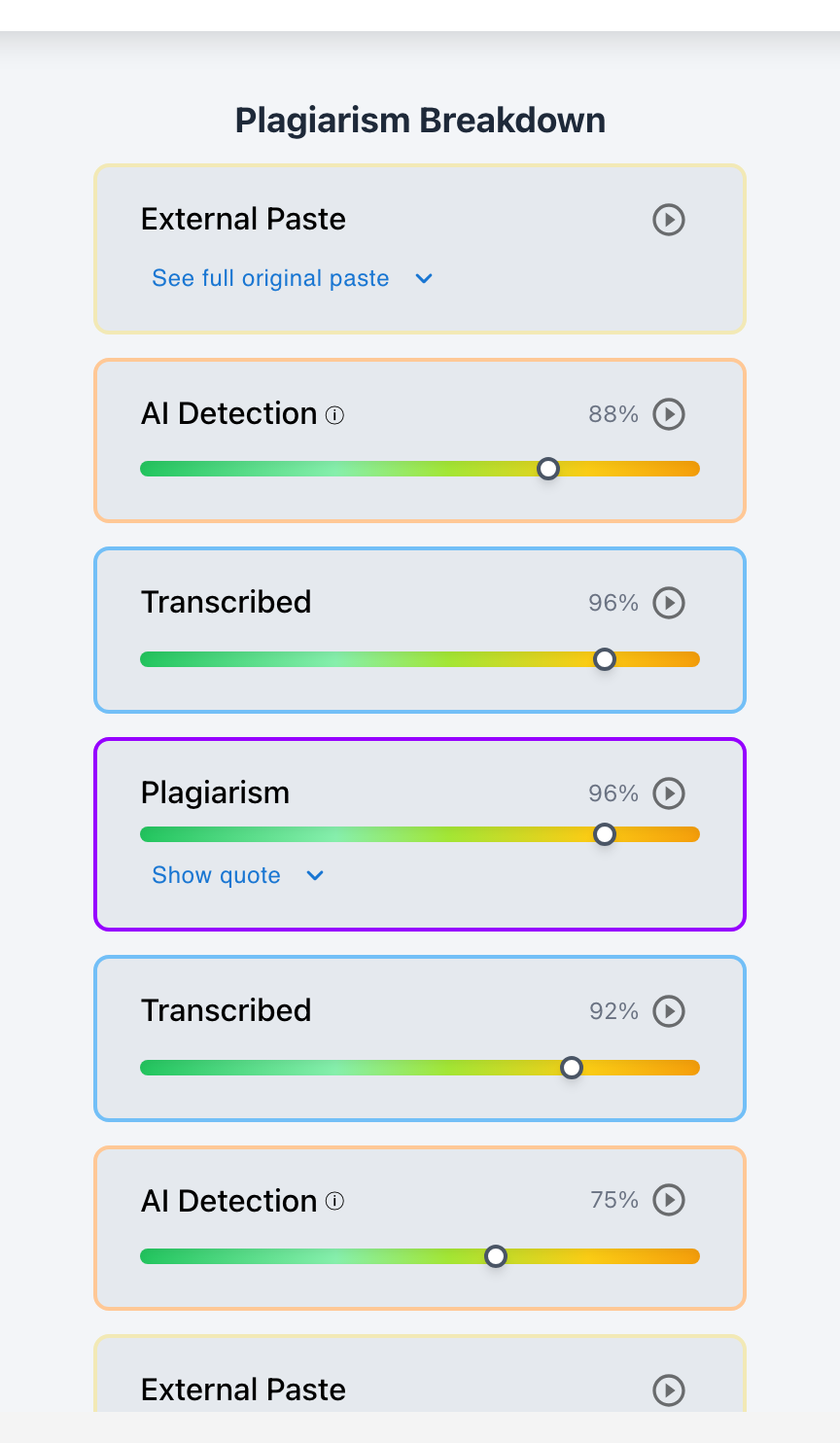
Checkmark Plagiarism protects honest students by pairing essay writing playback with AI detection, plagiarism detection, autograding, and integrations with Canvas and Google Classroom.
The 5 Pillars of Authentic Drafting Evidence
1. Keystroke Playback Replay
Checkmark's 15-second video replay showing every keypress, thinking pause, and paragraph formulation over 3+ hours of active drafting.
2. Document Version History
Google Docs or Word version history showing multi-day session progression: rough outline on Day 1, draft on Day 4, final edits on Day 7.
3. High Revision & Backspace Depth
Logs showing 15–30% backspaces, deleted clauses, and restructured arguments, proving active human self-editing and cognitive struggle.
4. Pre-Writing & Research Artifacts
Rough handwritten notes, brainstorming scratchpads, library search histories, and highlighted PDFs of cited scholarly articles.
5. Oral Comprehension & Vocabulary Fluency
Participating in a 3-minute oral check-in where the student defines advanced terms, explains the origin of specific arguments, and articulates their personal perspective fluently.
Read more in how Checkmark writing process analysis works.
Comparison: Circumstantial AI Score vs. Authentic Drafting Dossier
Circumstantial AI Detector Accusation
- "Detector gave your essay an 88% AI score."
- Based solely on vocabulary predictability.
- Cannot prove who sat at the computer.
- Frequently overturned in academic appeals.
Checkmark Authentic Drafting Dossier
- 4.3 hours active keystroke typing log.
- 25% backspaces, deletions, and moved text.
- Highlighted research PDFs and rough outlines.
- Fluently defended in a 3-minute oral check-in.
A 5-Step Defense Protocol for Accused Students
Student Exoneration Protocol:
- 1. Remain calm and request a copy of the specific report and flagged passages.
- 2. Request your teacher or department chair to review your Checkmark Playback replay.
- 3. Export your Google Docs or Word version history showing multi-day session timestamps.
- 4. Gather rough notes, initial outlines, and highlighted research PDFs.
- 5. Offer to complete a 5-minute oral defense to answer any questions about your writing.
How Checkmark Plagiarism Powers Student Protection
Checkmark Plagiarism combines **AI detection, essay writing playback, static AI detection, plagiarism detection, autograding, and Canvas/Google Classroom integrations** to automatically generate comprehensive drafting dossiers that protect honest students from false accusations.
Frequently Asked Questions
What is the single best piece of evidence to clear an AI accusation?
A Checkmark Essay Playback replay showing hours of active keystroke typing, thinking pauses, and high revision rates (15–30% backspaces).
What if I wrote my paper in Microsoft Word and pasted it into Canvas?
Provide your original Word (.docx) file with AutoSave metadata showing creation dates, save timestamps, and rough notes to prove offline drafting.
Can teachers ignore my document version history?
No. Academic integrity policies and due process standards require instructors and conduct boards to consider tangible creation evidence over probabilistic scores.
What is a normal student backspace rate?
Authentic student writing typically exhibits a 15% to 30% backspace/edit rate as thoughts are refined. AI copy-pastes show 0% edits.
How does an oral defense help clear a student?
Explaining your thesis and defining complex terms in person proves that you understand the material and authored the intellectual content.
How does Checkmark Plagiarism integrate with Canvas LMS?
Checkmark Plagiarism displays visual writing playback timelines, session breakdowns, and dual AI/plagiarism reports directly inside Canvas SpeedGrader.
What should I do if a teacher refuses to look at my evidence?
Politely request an academic integrity review with your school's department head, guidance counselor, or academic dean.
Can students fake realistic typing history?
Simulating hours of realistic pauses, typos, deletions, and sentence rewrites takes longer than actually writing the paper honestly.
Does keeping research notes help prevent AI accusations?
Yes. Retaining rough drafts, outlines, and highlighted source PDFs provides corroborating proof of authentic research and independent scholarship.
Why is authentic drafting evidence superior to AI detector scores?
Because detectors calculate statistical guesses on static text, whereas drafting evidence proves the physical human reality of document creation.
Defending Honest Scholarship with Indisputable Facts
Honest students should never fear algorithmic false alarms. By compiling comprehensive drafting evidence and reviewing creation history with Checkmark Plagiarism, students and educators ensure that academic truth, fairness, and due process prevail.
Checkmark Plagiarism supports this comprehensive approach with AI detection, essay writing playback, static AI detection, plagiarism detection, autograding, and integrations with Canvas and Google Classroom.
See how Checkmark pairs essay writing playback with multi-signal detection to provide authentic drafting evidence inside your LMS. View a sample report or request a demonstration.