
It is NOT safe to upload student essays to free, unapproved public AI detection websites—doing so can violate federal FERPA laws and expose student writing to commercial data harvesting. However, it IS 100% safe to scan student essays using district-approved, contractually bound enterprise platforms like Checkmark Plagiarism.
Well-intentioned teachers frequently encounter suspicious essays and search Google for a "free AI detector." Within seconds, they copy and paste a student's full essay—often containing the student's name, grade level, and deeply personal reflections—into a third-party website with unknown ownership. This common practice exposes schools to severe data breaches, violates federal privacy laws, and compromises student intellectual property. Understanding the difference between unsafe consumer websites and certified educational enterprise software is vital for every educator.
Below is a comprehensive guide on the safety risks of public AI detectors and how enterprise integration protects your school.
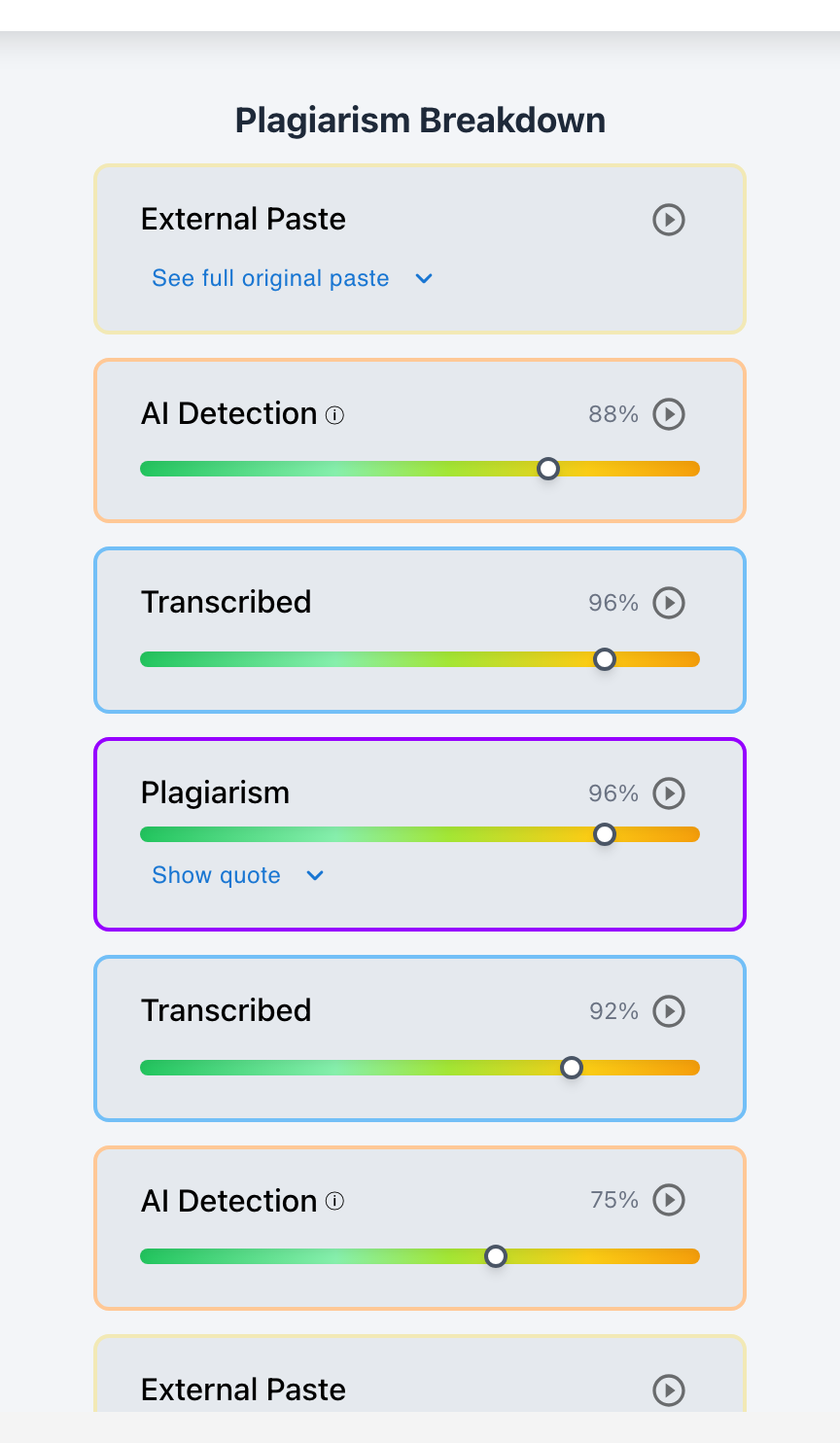
Checkmark Plagiarism guarantees enterprise safety by pairing AI detection with essay writing playback, plagiarism detection, autograding, and integrations with Canvas and Google Classroom.
The 4 Safety Hazards of Free Online AI Checkers
1. Student PII Data Exposure
Essays often contain student names, teacher names, school IDs, and sensitive personal stories that are transmitted to unsecured third-party servers.
2. Commercial AI Model Ingestion
Free websites routinely harvest submitted student prose to train commercial machine learning models without student or parental consent.
3. Lack of Cloud Security Certifications
Consumer tools lack enterprise SOC 2 Type II audits, end-to-end encryption, and multi-tenant isolation, leaving data vulnerable to breaches.
4. Direct Federal Privacy Law Violations
Disclosing student education records to third-party vendors without a signed Data Privacy Agreement (DPA) directly violates FERPA and state privacy statutes.
Why District-Contracted Enterprise Platforms Are 100% Safe
Enterprise platforms like Checkmark Plagiarism operate under completely different legal and technical architectures:
- Signed Institutional Data Privacy Agreements: Checkmark signs binding DPAs legally guaranteeing that student data is never sold, shared, or used to train AI.
- Ephemeral RAM Processing: AI probability calculations occur in temporary memory and are purged immediately after generating the report.
- LTI 1.3 Canvas & Classroom Security: Uses OAuth 2.0 asymmetric encryption, keeping student data strictly within your institution's secure boundary.
Read more in how Checkmark writing process analysis works.
Comparison: Free Consumer Checkers vs. Checkmark Enterprise Platform
Free Consumer Checkers (High Risk & Unsafe)
- Pasting text into random public websites.
- Student essays harvested for commercial AI training.
- No Data Privacy Agreement; potential FERPA breach.
- Unencrypted transit and unverified server locations.
Checkmark Enterprise Platform (Certified Safe)
- Embedded directly in Canvas SpeedGrader & Classroom.
- Contractually bound zero-training guarantee.
- 100% FERPA, COPPA, and CSPC compliant with signed DPA.
- AES-256 encrypted multi-tenant institutional isolation.
A 5-Step Educator Protocol for Safe AI Evaluation
Teacher Safety Checklist:
- 1. Never copy/paste student writing into unapproved public AI detector websites.
- 2. Use only district-approved tools like Checkmark Plagiarism inside your LMS.
- 3. If manually checking an essay, ensure all student names and identifying details are removed.
- 4. Verify that your school has an active Data Privacy Agreement (DPA) on file with the vendor.
- 5. Rely on writing playback replays and revision history rather than static score websites.
How Checkmark Plagiarism Powers Safe Classrooms
Checkmark Plagiarism combines **AI detection, essay writing playback, static AI detection, plagiarism detection, autograding, and Canvas/Google Classroom integrations** to give educators a secure, FERPA-compliant environment for evaluating student writing.
Frequently Asked Questions
Is it legal for teachers to use free online AI detectors?
In most districts, uploading student essays containing personal details to unvetted websites violates district technology policies and federal FERPA privacy regulations.
What makes an AI detector safe for school use?
A safe AI detector has a signed Data Privacy Agreement (DPA), adheres to FERPA/COPPA regulations, never trains AI on student work, and uses encrypted multi-tenant storage.
Can student essays be leaked through free AI websites?
Yes. Many free tools store uploaded text in unsecured databases that can be indexed by search engines or harvested by third-party data brokers.
Does Checkmark store student essays on public servers?
No. Checkmark processes essays ephemerally or stores them strictly within your school's private encrypted institutional tenant.
How does Checkmark Plagiarism integrate with Canvas LMS?
Checkmark provides certified LTI 1.3 integration, SpeedGrader sidebar embeds, two-way grade passback, and single sign-on (SSO).
What should a teacher do if they suspect AI writing?
Use Checkmark embedded inside Canvas SpeedGrader or Google Classroom to review writing playback timelines, active drafting hours, and paragraph heatmaps safely.
Does Checkmark use student text to train AI models?
No. Checkmark maintains a strict zero-training policy: student writing is never used to train or fine-tune artificial intelligence algorithms.
What is the safest way to evaluate student authorship?
The safest method is reviewing the student's keystroke writing playback and revision history inside your district's LMS rather than pasting text into external websites.
Is student data encrypted during processing in Checkmark?
Yes. Checkmark enforces AES-256 encryption at rest and TLS 1.3 encryption in transit for all student coursework.
Why is enterprise LMS integration safer than standalone websites?
Because LTI 1.3 integration uses secure OAuth 2.0 tokens, eliminating separate accounts and keeping all student data within your school's protected ecosystem.
Safety and Integrity in a Unified Platform
Maintaining academic honesty should never put student privacy at risk. By relying on district-approved enterprise platforms like Checkmark Plagiarism, educators can investigate writing integrity safely, legally, and with complete peace of mind.
Checkmark Plagiarism supports this comprehensive approach with AI detection, essay writing playback, static AI detection, plagiarism detection, autograding, and integrations with Canvas and Google Classroom.
See how Checkmark pairs certified enterprise safety with multi-signal detection to protect student essays inside your LMS. View a sample report or request a demonstration.