
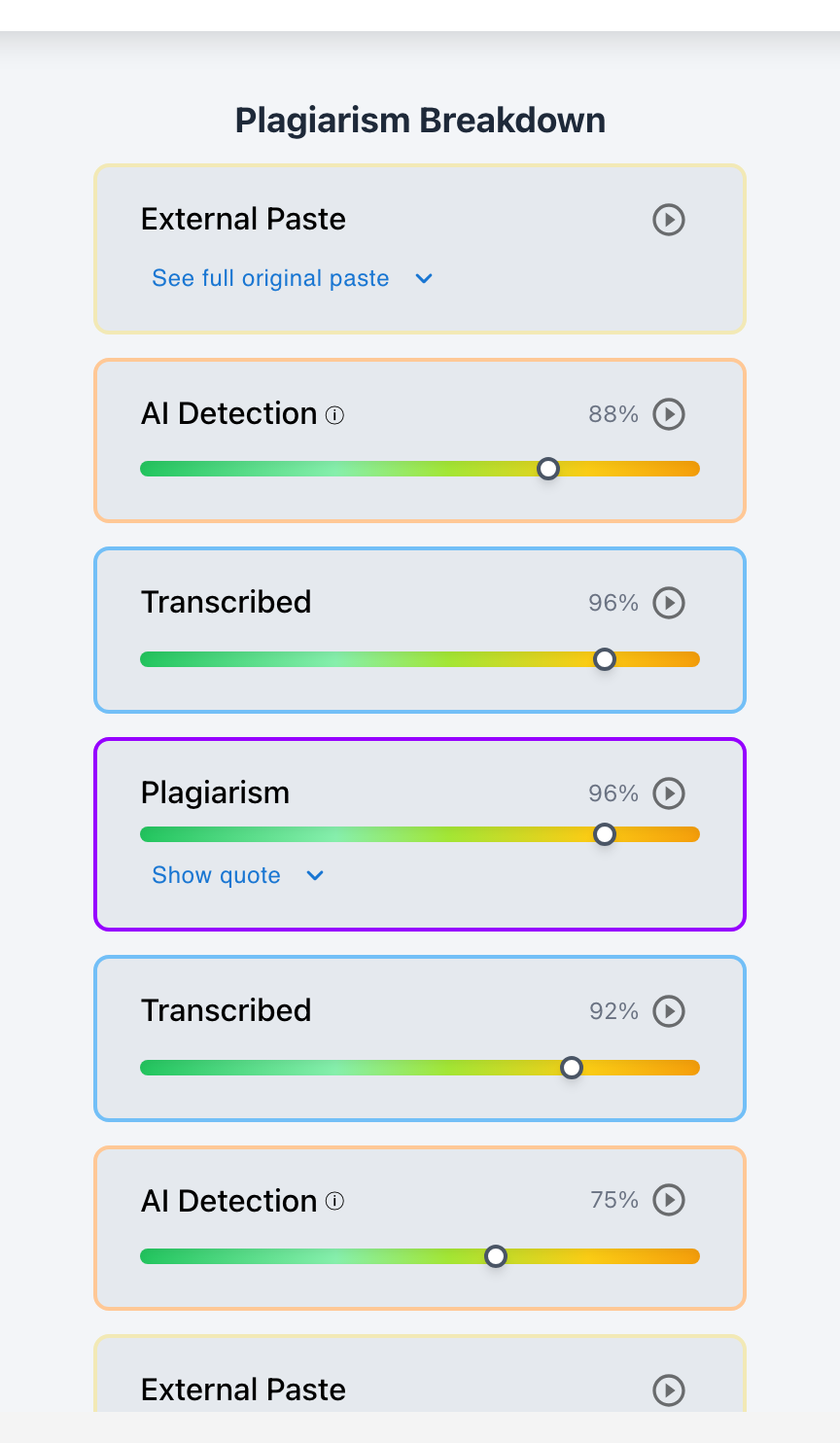
Teachers should investigate a sudden change in writing ability through a 4-stage, evidence-first framework: first, audit writing process telemetry in Checkmark Playback (checking active drafting hours, backspaces, and paste logs); second, compare stylometric metrics against earlier baseline work; third, conduct a supportive, non-adversarial student conference using playback video as an objective reference; and fourth, apply a calibrated decision matrix based on physical evidence.
When a student's writing ability suddenly leaps from remedial sentences to collegiate prose, teachers face a delicate challenge. Accusing a student prematurely based on subjective suspicion damages teacher-student rapport and risks penalizing genuine hard work. Conversely, ignoring obvious ghostwriting or AI shortcuts compromises academic standards. A structured, evidence-first investigative protocol ensures that every inquiry is grounded in physical facts, transparent due process, and pedagogical support.
Below is a comprehensive guide for conducting fair, defensible writing ability investigations.
Checkmark Plagiarism powers evidence-based investigations by pairing AI detection with essay writing playback, plagiarism detection, autograding, and integrations with Canvas and Google Classroom.
The 4-Stage Investigation Framework
Stage 1: Internal Telemetry Audit
Open Checkmark Playback in SpeedGrader to inspect active typing duration, deletion rates, and clipboard paste logs before contacting the student.
Stage 2: Longitudinal Baseline Comparison
Cross-examine the submission's lexical complexity and sentence length against the student's Week 1 In-Class Diagnostic sample.
Stage 3: Supportive Student Conference
Hold a brief, non-confrontational 2-minute meeting: show the 15-second playback replay together and ask open-ended questions about the thesis.
Stage 4: Objective Decision Matrix
If drafting telemetry and oral comprehension are verified, clear the paper with praise; if unauthorized shortcuts are confirmed, apply course policy.
How to Conduct a Non-Adversarial Student Conference
Framing the conversation supportively leads to honest outcomes:
- Use Playback as a Neutral Mirror: Rather than saying "I think you used ChatGPT," say: "Let's take a quick look at your writing playback in Canvas together. I noticed this section appeared all at once at 11:30 PM. Can you walk me through where this was drafted?"
- Test Conceptual Ownership: Ask open-ended questions: "What was the most challenging part of researching this argument?" and "Can you explain what you meant by [complex phrase] here?"
- Listen for Offline Drafting Context: Give the student space to explain if they wrote on paper or drafted in Microsoft Word on a home desktop.
Read more in how Checkmark writing process analysis works.
Comparison: Subjective Accusation vs. Evidence-First Investigation
Subjective Accusation (High Conflict & Risk)
- Based solely on "it doesn't sound like you."
- Student feels attacked and becomes defensive.
- No physical telemetry to prove or disprove the claim.
- High risk of contentious parent appeals.
Evidence-First Investigation (Checkmark Standard)
- Grounded in keystroke logs, active hours, and baselines.
- Non-adversarial conference using 15-second video replay.
- Concrete physical facts resolve the case in minutes.
- Protects student due process and teacher integrity.
A 5-Step Educator Protocol for Writing Ability Audits
Investigation Protocol Checklist:
- 1. Review the Checkmark Assessment report in Canvas SpeedGrader (AI score, active hours, backspace rate).
- 2. Check the baseline comparison tab: evaluate if vocabulary jump exceeds historical benchmarks.
- 3. Schedule a brief 2-minute private check-in after class.
- 4. Play the 15-second time-lapse replay and ask the student to explain their drafting process.
- 5. Record the outcome in Checkmark's case log to ensure consistent documentation across departments.
How Checkmark Plagiarism Powers Defensible Investigations
Checkmark Plagiarism combines **AI detection, essay writing playback, static AI detection, plagiarism detection, autograding, and Canvas/Google Classroom integrations** to make student writing investigations transparent, fair, and legally defensible.
Frequently Asked Questions
What is the first thing a teacher should do when an essay looks too good?
Open Checkmark Playback to check the Active Typing Duration and Deletion Rate metrics before making any assumptions or speaking to the student.
How does writing playback prevent awkward student confrontations?
Because playback provides objective video evidence of how the text entered the document, shifting the conversation from personal opinions to observable facts.
What if a student genuinely improved with the help of a tutor?
If a student worked with a tutor, their Playback will show multi-hour drafting and backspaces, and they will easily explain their ideas during the check-in.
What questions should a teacher ask in an integrity conference?
Ask: "Can you summarize your main argument in your own words?", "What does this word mean?", and "Where was this document drafted?"
How does Checkmark Plagiarism integrate with Canvas LMS?
Checkmark provides certified LTI 1.3 integration, SpeedGrader sidebar embeds, two-way grade passback, and single sign-on (SSO).
What if a student drafted in Word and pasted the essay into Canvas?
Ask the student to email their original Word (.docx) file containing creation timestamps and version editing history.
How long should a student conference take?
With Checkmark Playback, most student check-ins take under 2 minutes because the video replay and baseline data provide immediate clarity.
Can writing playback be shared with parents during appeals?
Yes. Checkmark generates exportable PDF audit summaries and time-lapse video links that can be shared with parents and administrators.
What is an evidence-first investigation standard?
It is an integrity protocol where academic decisions are based on verifiable physical telemetry and oral comprehension rather than single detector percentages.
Why is documentation essential during integrity reviews?
Because clear documentation ensures consistent policy enforcement across teachers and protects the school against arbitrary grading claims.
Fostering Integrity Through Clarity and Empathy
Academic investigations should build trust and encourage genuine student growth. By using Checkmark Plagiarism to ground inquiries in objective writing process telemetry, educators ensure that every student is treated with dignity, fairness, and complete truth.
Checkmark Plagiarism supports this comprehensive approach with AI detection, essay writing playback, static AI detection, plagiarism detection, autograding, and integrations with Canvas and Google Classroom.
See how Checkmark pairs writing process forensics with multi-signal detection to investigate student writing changes. View a sample report or request a demonstration.