
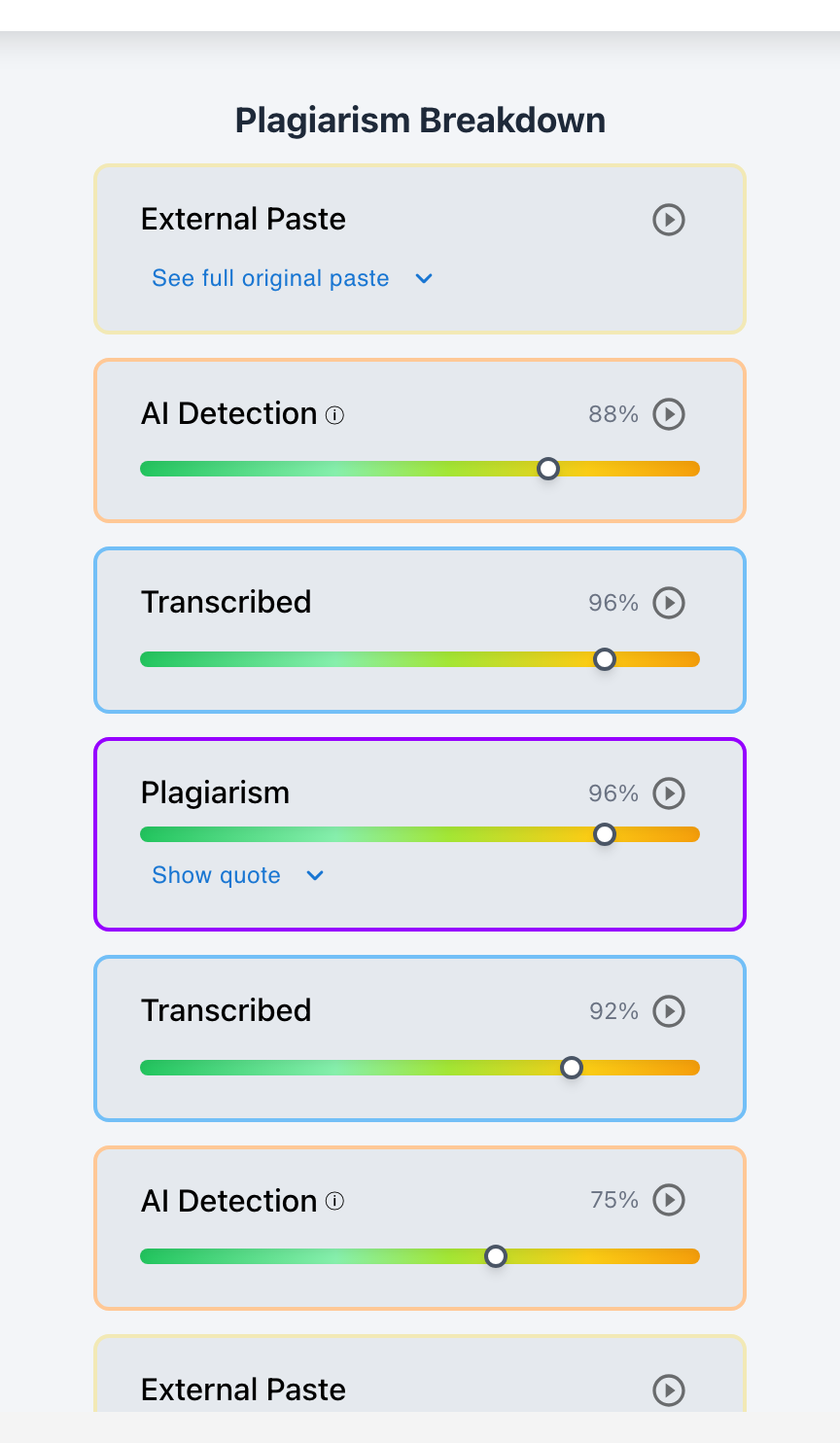
Before scheduling an academic integrity meeting with a student, a teacher should possess at least two corroborated proof points from the "3-Pillar Evidentiary Standard": Process Evidence (writing playback showing <15 minutes active drafting or an instant 0.05-second paste payload), Textual Evidence (hallucinated DOIs, fake citations, or passage-level source matches), and Comparative Baseline Evidence (a severe stylometric departure from verified in-class diagnostic writing).
Scheduling an academic misconduct meeting based on an uncorroborated single signal—such as an 80% AI detector percentage or a subjective feeling that "this vocabulary sounds too advanced"—creates severe pedagogical and administrative risks. If the student wrote the essay honestly, an unverified conference causes lasting psychological distress and breeds resentment. Meeting with a student only after reaching the 2-of-3 Pillar Threshold ensures that every inquiry is grounded in objective physical reality, protecting student rights and eliminating defensiveness. Checkmark Plagiarism aggregates all three evidence pillars in a unified Canvas SpeedGrader dossier.
Below is a comprehensive guide on the evidentiary thresholds required before initiating an integrity conference.
Checkmark Plagiarism validates evidence thresholds by pairing AI detection with essay writing playback, plagiarism detection, autograding, and integrations with Canvas and Google Classroom.
The "3-Pillar Evidentiary Standard"
Pillar 1: Process Telemetry
Physical Drafting Proof: Checkmark Playback logs <15 mins active typing for a 1,500-word paper, 0.05s clipboard paste payloads, or flat mechanical transcription.
Pillar 2: Textual & Source Forensics
Factual Grounding: Citations contain unresolvable DOIs, non-existent journal titles (AI hallucinations), or concentrated peer passage matches.
Pillar 3: Comparative Baselines
Linguistic Departure: The submission exhibits a 300%+ leap in syntactic complexity and vocabulary tier compared to verified Week 1 in-class diagnostic samples.
The 2-of-3 Corroboration Rule
Determining whether you have sufficient evidence to schedule a meeting:
- 1 Pillar Alone (Insufficient): An AI score of 85% by itself is NOT enough to call a meeting if the student has 4 hours of typing telemetry in Playback.
- 2 Pillars Corroborated (Sufficient for Check-In): Zero drafting hours in Playback (Pillar 1) + 2 fake hallucinated citations (Pillar 2) provides rock-solid justification for a supportive 2-minute conference.
- All 3 Pillars Present (Conclusive Violation): Zero drafting hours + fake DOIs + massive baseline disconnect constitutes open-and-shut proof of full AI generation.
Read more in how Checkmark writing process analysis works.
Comparison: Single-Score Suspicion vs. Multi-Pillar Corroboration
Multi-Pillar Corroboration (Checkmark Standard)
- Requires at least 2 independent corroborated pillars.
- Backed by physical keystrokes and verified database checks.
- Meeting focuses on reviewing observable digital facts.
- Virtually zero risk of false accusations.
Single-Score Suspicion (High Vulnerability)
- Initiates meetings based on a single detector percentage.
- No physical telemetry to substantiate the claim.
- High risk of accusing honest, articulate writers.
- Vulnerable to contentious administrative appeals.
A 5-Step Educator Protocol for Meeting Preparation
Meeting Readiness Checklist:
- 1. Open the student's submission in Checkmark Plagiarism inside Canvas SpeedGrader.
- 2. Verify Pillar 1: check Active Typing Duration and Paste Logs in Writing Playback.
- 3. Verify Pillar 2: check Citation Verification Cards for unresolvable DOIs or peer matches.
- 4. Verify Pillar 3: cross-check the Authorship Portfolio against the Week 1 In-Class baseline.
- 5. If at least 2 pillars are confirmed, schedule a private 2-minute oral check-in after class.
How Checkmark Plagiarism Powers Evidence Readiness
Checkmark Plagiarism combines **AI detection, essay writing playback, static AI detection, plagiarism detection, autograding, and Canvas/Google Classroom integrations** to automatically evaluate all three evidence pillars in a unified SpeedGrader report.
Frequently Asked Questions
Is an AI detector score of 95% enough evidence to call a student meeting?
Not on its own. You must corroborate the score with Process Evidence (zero drafting hours in Playback) or Textual Evidence (hallucinated sources) before meeting.
What is the '2-of-3 Corroboration Rule'?
It is the integrity best practice requiring at least two independent proof points (Process, Textual, or Baseline) before initiating a formal student conference.
How does writing playback provide Process Evidence?
Playback records active typing hours, deletions, and paste payloads, physically proving whether the student composed the text or inserted an external file.
What if a student has Process Evidence of honest writing, but a high AI score?
The student is exonerated. The multi-hour typing telemetry proves authentic human labor, and no conference is necessary.
How does Checkmark Plagiarism integrate with Canvas LMS?
Checkmark provides certified LTI 1.3 integration, SpeedGrader sidebar embeds, two-way grade passback, and single sign-on (SSO).
What should a teacher do if only 1 pillar is present?
Conduct additional quiet fact-checking (e.g., spot-checking sources or asking an informal question in class) before initiating a formal integrity inquiry.
How does the 3-pillar standard protect educators during parent appeals?
Presenting physical keystrokes alongside failed DOI database checks provides incontrovertible, multi-layered proof that withstands legal and administrative scrutiny.
What questions should be prepared for the meeting?
Prepare 2 or 3 open-ended conceptual questions: "What was your main argument in paragraph 3?" and "Where did you find this specific source?"
Can students see the evidence pillars in their report?
Yes. Transparent reporting allows students to see their own drafting telemetry and citation verification status, encouraging honest reflection.
Why is an evidentiary threshold essential for positive school culture?
Because ensuring that accusations are made only with substantial evidence builds student trust, prevents anxiety, and maintains high academic standards.
Fostering Justice Through Rigorous Evidence Standards
Educational integrity requires holding students accountable with fairness, precision, and undeniable truth. By adhering to the 3-Pillar Evidentiary Standard with Checkmark Plagiarism, educators ensure that every academic meeting is grounded in objective reality, protecting students and upholding excellence.
Checkmark Plagiarism supports this comprehensive approach with AI detection, essay writing playback, static AI detection, plagiarism detection, autograding, and integrations with Canvas and Google Classroom.
See how Checkmark pairs writing playback with multi-signal detection to support evidence-first conferences. View a sample report or request a demonstration.