
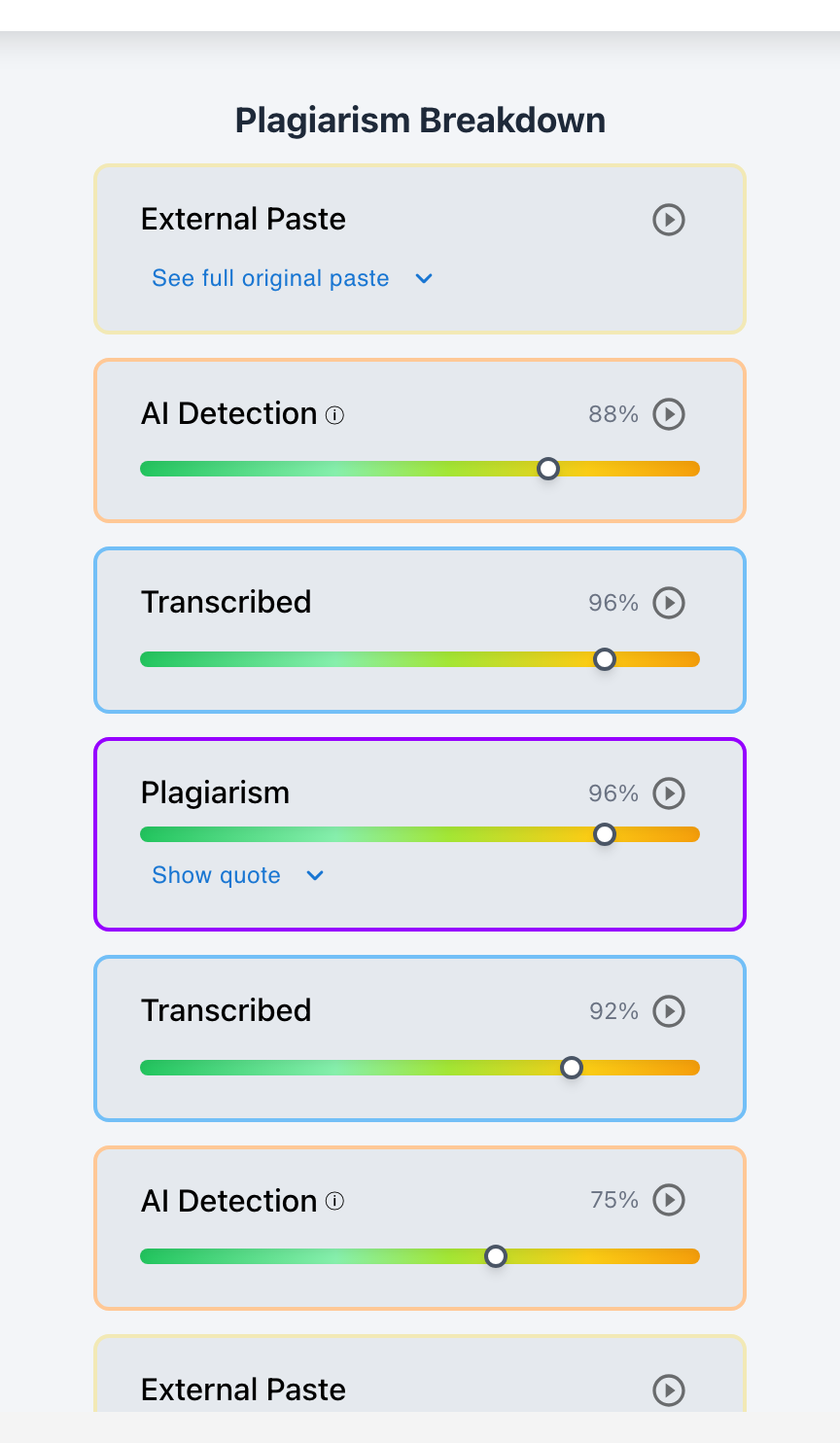
Teachers can give students a fair, structured chance to explain suspicious writing through a 4-step restorative protocol: 1) create a private, non-accusatory setting; 2) ask 3 diagnostic oral questions evaluating conceptual thesis mastery, source acquisition history, and specific vocabulary choices; 3) review the Checkmark Writing Playback timeline together to explore drafting anomalies; and 4) determine the resolution based on observed comprehension and telemetry facts.
Every student is entitled to fundamental academic due process. When an essay appears suspicious—whether due to an elevated AI probability score, a sudden surge in vocabulary, or an instant paste event—accusing the student outright creates fear and defensiveness. An honest student who conducted extensive research will welcome the opportunity to discuss their ideas; conversely, a student who relied on AI will struggle to explain the logic of machine-generated paragraphs. Providing a supportive, structured 2-minute oral check-in ensures that every student is heard, false alarms are caught, and integrity is upheld.
Below is a comprehensive guide on facilitating fair, non-adversarial student explanation conferences.
Checkmark Plagiarism supports due process conferences by pairing AI detection with essay writing playback, plagiarism detection, autograding, and integrations with Canvas and Google Classroom.
The 3 Diagnostic Oral Defense Questions
Question 1: Conceptual Mastery
"Can you walk me through your main argument in Section 2 in your own words, and why you structured it this way?"
Question 2: Source Acquisition
"Where did you find this specific study cited on page 3, and what was the author's primary finding?"
Question 3: Vocabulary & Phrasing
"You used the term 'epistemological paradigm' here. Can you explain what you meant by that in this context?"
The 4-Step Student Explanation Framework
Structuring the meeting for maximum fairness and clarity:
- 1. Frame with Curiosity, Not Accusation: Start by saying: "I'm really interested in some of the points in your essay and wanted to take two minutes to talk through your research process."
- 2. Listen Without Interrupting: Give the student 60 seconds of uninterrupted time to summarize their thesis and research methodology.
- 3. Share Writing Playback Collaboratively: Open the Checkmark Playback replay in Canvas SpeedGrader: "Let's look at the drafting history together to see how your drafts progressed."
- 4. Evaluate Synthesis vs. Memorization: Note whether the student demonstrates deep conceptual ownership or merely recites superficial keywords.
Read more in how Checkmark writing process analysis works.
Comparison: Interrogative Accusation vs. Supportive Due Process Check-In
Supportive Due Process Check-In (Checkmark Standard)
- Framed as an exploratory conversation about ideas.
- Uses 3 diagnostic conceptual questions.
- Reviews physical writing playback collaboratively.
- Protects innocent students from false accusations.
Interrogative Accusation (Hostile & Ineffective)
- Opens with: "The AI detector flagged you for cheating."
- Puts student on immediate defensive breakdown.
- Fails to evaluate conceptual understanding.
- Leads to entrenched denials and parent escalation.
A 5-Step Educator Protocol for Student Explanation Meetings
Student Due Process Checklist:
- 1. Schedule a brief 2-minute private check-in at the end of class or during office hours.
- 2. Ask Question 1 (Conceptual Mastery) and Question 2 (Source Acquisition).
- 3. Open Checkmark Playback in Canvas SpeedGrader and review the drafting timeline together.
- 4. If the student articulates their arguments clearly, praise their research and clear the submission.
- 5. If the student struggles to explain the text and telemetry shows paste payloads, guide them toward an honest rewrite.
How Checkmark Plagiarism Powers Due Process Conferences
Checkmark Plagiarism combines **AI detection, essay writing playback, static AI detection, plagiarism detection, autograding, and Canvas/Google Classroom integrations** to provide educators with an objective, neutral digital record that grounds student conferences in truth.
Frequently Asked Questions
Why is an oral defense the best way to verify authorship?
Because genuine understanding cannot be faked on the spot; an author who spent hours researching can easily discuss their ideas, while someone who copied AI cannot.
What if a student is naturally shy or anxious during meetings?
Keep the questions simple and conversational, focus on their research interests, and use Checkmark Playback to validate their authentic typing effort visually.
Can students bring their research notes to the meeting?
Yes. Encouraging students to bring rough notes, browser bookmarks, or outlines helps them demonstrate authentic research effortlessly.
How long should a student explanation conference last?
A focused, 3-question check-in supported by writing playback typically resolves in 2 to 3 minutes.
How does Checkmark Plagiarism integrate with Canvas LMS?
Checkmark provides certified LTI 1.3 integration, SpeedGrader sidebar embeds, two-way grade passback, and single sign-on (SSO).
What if a student successfully explains the paper, but playback shows a paste event?
Ask if they composed the text in an offline desktop app (like Word) and request the original .docx file with version timestamps.
How does providing due process protect teachers from grade appeals?
Demonstrating that the student was given a fair, recorded opportunity to explain their work eliminates procedural fairness complaints.
What should a teacher do if a student admits to using AI during the meeting?
Praise their honesty, explain the course policy clearly, and assign a restorative revision opportunity for partial credit.
Does Checkmark Autograder assist with oral defense prep?
Autograder highlights specific analytical sentences, generating recommended oral defense questions directly in SpeedGrader.
Why is due process essential for student mental health?
Because treating students with fairness and respect prevents traumatic false accusations and preserves a positive classroom community.
Building a Culture of Respect, Fairness, and Integrity
Academic accountability works best when paired with empathy and due process. By offering students a supportive, structured opportunity to explain their writing with Checkmark Plagiarism, educators ensure that integrity inquiries are just, educational, and universally respected.
Checkmark Plagiarism supports this comprehensive approach with AI detection, essay writing playback, static AI detection, plagiarism detection, autograding, and integrations with Canvas and Google Classroom.
See how Checkmark pairs writing playback with oral defense prompts to support fair student due process. View a sample report or request a demonstration.