
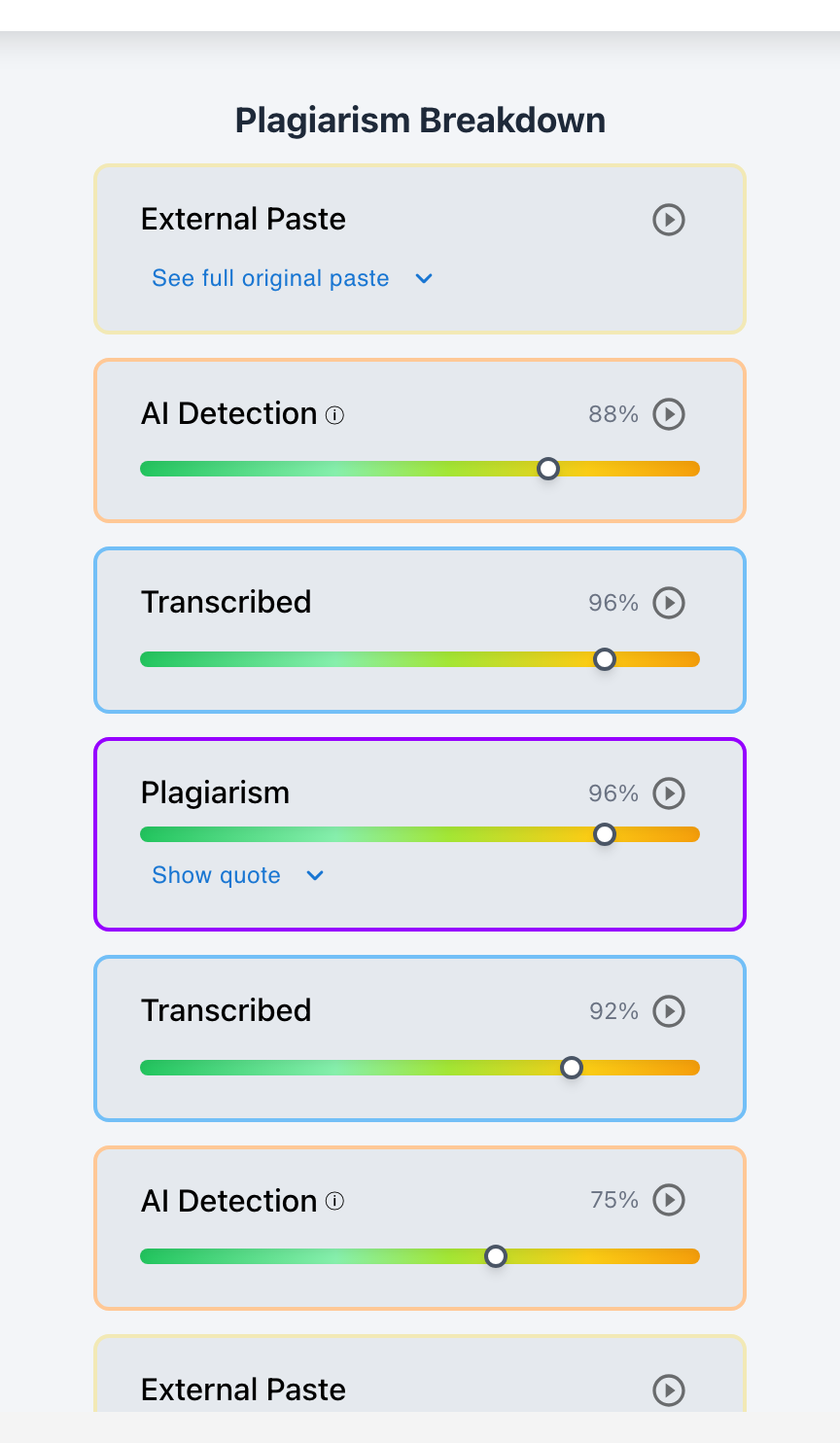
Yes. Advanced plagiarism checkers compare all student submissions within the same class in real time—indexing each assignment as it is submitted and instantly cross-matching it against all other classmates in the same course section, parallel periods, and historical institutional archives.
One of the most frequent vectors of academic dishonesty is peer sharing: two friends collaborating on an individual assignment, or one student copying another student's draft right before the submission deadline. Older or basic free plagiarism tools only scan open web pages and Wikipedia, leaving teachers completely blind to student-to-student copying within their own classroom. Checkmark Plagiarism's Internal Cohort Matching Engine automatically indexes and compares every submission across class rosters in Canvas and Google Classroom while maintaining full FERPA compliance.
Below is a comprehensive technical and pedagogical guide on how plagiarism checkers evaluate peer submissions in the same class.
Checkmark Plagiarism enables in-class peer matching by pairing plagiarism detection with AI detection, essay writing playback, autograding, and integrations with Canvas and Google Classroom.
The 4 Layers of In-Class Peer Matching
1. Real-Time Cohort Indexing
As each student submits their file, Checkmark immediately indexes the text into a private, temporary classroom repository for instant cross-matching.
2. Cross-Period & Section Comparisons
Checkmark automatically cross-checks submissions between Period 1, Period 3, and Period 6 to catch students who share files with friends in later periods.
3. Side-by-Side Playback Synchronization
When an in-class match is detected, Checkmark pulls both students' keystroke playback timelines side-by-side to prove who created the text first.
4. FERPA-Compliant Peer Evidence
The platform displays matched text highlights for teachers while protecting student privacy and preventing unauthorized data leakage.
Why Web-Only Plagiarism Scanners Fail in the Classroom
Understanding the severe blind spots of web-only scanners:
- The Peer Blind Spot: If Student A writes an original paper and gives it to Student B, a web-only scanner will return 0% for both because the text does not exist on Google or Wikipedia.
- The Parallel Period Advantage: Students in morning classes often send their completed files to friends in afternoon classes; without cross-period indexing, this cheating goes completely unnoticed.
- Institutional Memory: Checkmark maintains an institutional repository that checks submissions against assignments turned in by students in previous semesters.
Read more in how Checkmark writing process analysis works.
Comparison: Web-Only Scanners vs. Checkmark In-Class Cohort Engine
Checkmark In-Class Cohort Engine (Complete)
- Compares students in same class period instantly.
- Cross-checks across all teacher sections and terms.
- Pairs peer match with keystroke timeline replay.
- Identifies original author vs. recipient in seconds.
Web-Only Scanners (Severe Blind Spots)
- Only searches open internet pages and blogs.
- Completely blind to peer sharing in the same room.
- Cannot compare Period 1 against Period 5.
- No drafting playback or timestamp origin proof.
A 5-Step Educator Protocol for In-Class Peer Audits
In-Class Peer Audit Checklist:
- 1. Enable Checkmark Plagiarism on your Canvas or Google Classroom assignment.
- 2. Once the deadline passes, open the Assignment Integrity Overview dashboard.
- 3. Sort submissions by "Peer Similarity Match" to review flagged classmate pairs.
- 4. Click any flagged peer pair to view side-by-side text matches and writing playback replay.
- 5. Verify original authorship and follow institutional policy for unauthorized sharing.
How Checkmark Plagiarism Powers Classroom Cohort Matching
Checkmark Plagiarism combines **AI detection, essay writing playback, static AI detection, plagiarism detection, autograding, and Canvas/Google Classroom integrations** to automatically index and cross-match student work across classes in real time.
Frequently Asked Questions
Does Checkmark check students against each other in the same class?
Yes. Checkmark indexes all submissions within an assignment and instantly flags matching text between classmates in the same course section.
Can Checkmark detect copying between different class periods?
Yes. Checkmark cross-checks submissions across all sections taught by the teacher as well as other teachers across the entire school district.
How fast does peer matching occur?
Peer matching runs automatically in the background as students submit, updating similarity cards in Canvas SpeedGrader in real time.
Does in-class peer matching violate student privacy under FERPA?
No. Checkmark adheres strictly to FERPA standards; peer match data is visible only to authorized teachers and administrators within the school.
What if two students used the same template provided by the teacher?
Checkmark allows teachers to exclude prompt instructions, rubric templates, and assignment headers from similarity calculations.
How does Checkmark Plagiarism integrate with Canvas LMS?
Checkmark provides certified LTI 1.3 integration, SpeedGrader sidebar embeds, two-way grade passback, and single sign-on (SSO).
What does a peer similarity match look like in SpeedGrader?
SpeedGrader displays a highlight card showing the exact matching paragraphs and identifies the matched classmate's name for the teacher.
How does writing playback help resolve in-class copying?
Playback reveals which student typed the essay over hours and which student pasted the file in 0.05 seconds right before class.
Can students see which classmate they matched with?
Teachers can control student visibility settings, choosing whether students see peer match details or only general integrity feedback.
Why is in-class peer matching essential for school integrity?
Because peer-to-peer sharing is one of the most common forms of cheating, and detecting it ensures fair grading across all students.
Equitable Grading Across Every Classroom Period
Fair assessment requires knowing that every student submitted their own original work. By automating in-class peer matching and keystroke timeline verification with Checkmark Plagiarism, educators ensure that honest effort is rewarded and peer copying is addressed with absolute clarity.
Checkmark Plagiarism supports this comprehensive approach with AI detection, essay writing playback, static AI detection, plagiarism detection, autograding, and integrations with Canvas and Google Classroom.
See how Checkmark pairs in-class peer matching with writing playback to evaluate student submissions. View a sample report or request a demonstration.