
Yes. Checkmark Autograder features a centralized Rubric Library that allows individual teachers, course teams, and entire academic departments to save, reuse, clone, and standardize rubrics across multiple assignments, semesters, and courses with a single click.
Recreating rubrics from scratch for every essay assignment is a tedious administrative chore that introduces grading inconsistencies across classrooms. A school's English or History department often relies on standardized benchmarks—such as the AP DBQ Rubric, the 6-Traits Writing Framework, or custom state standards. With the Checkmark Rubric Library, educators maintain a master repository of verified rubrics that can be instantly applied to any assignment in Canvas, Google Classroom, or standalone web grading.
Below is a comprehensive guide on how to leverage the Rubric Library to streamline assignment setup, ensure departmental alignment, and track longitudinal student growth.
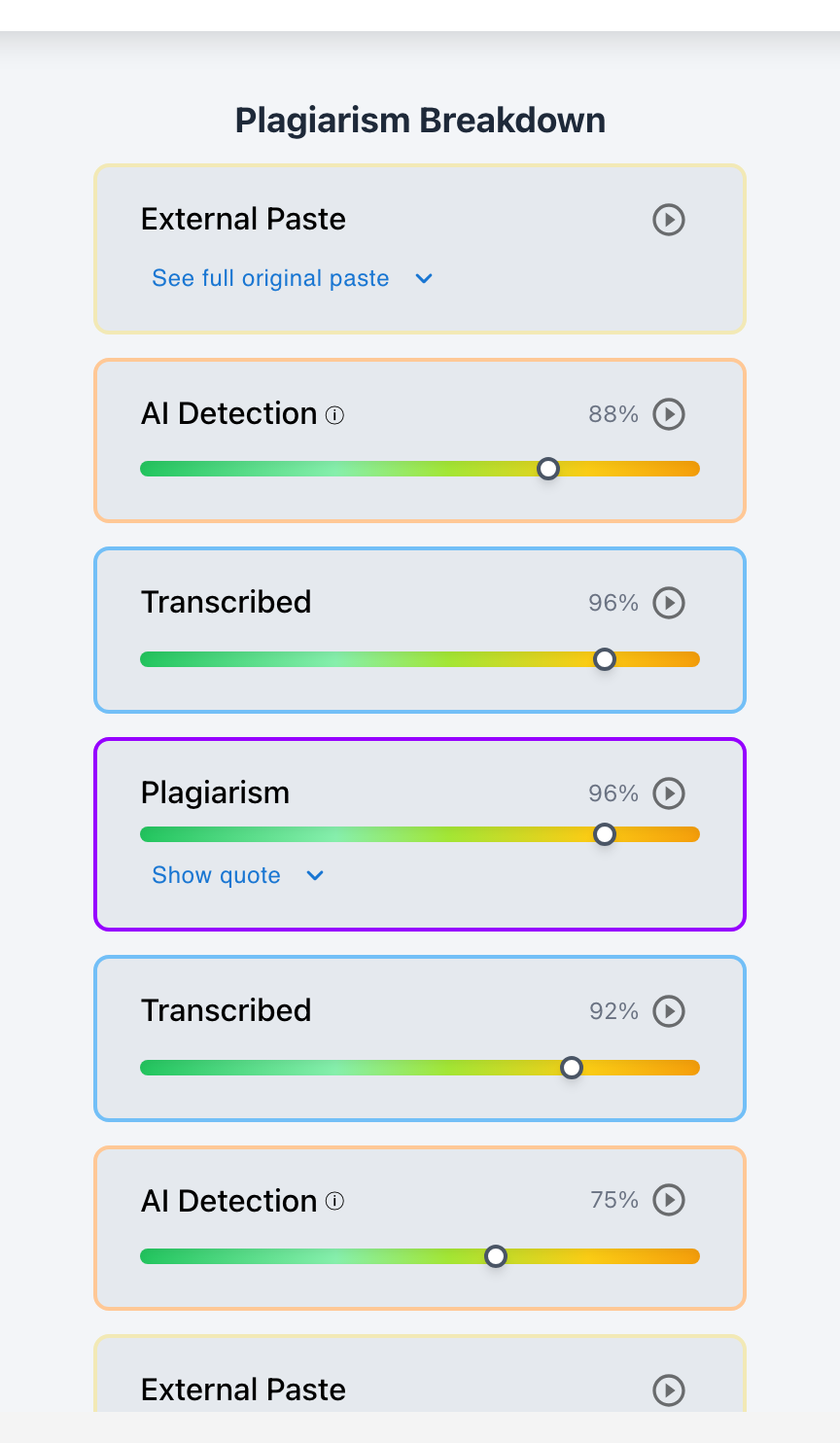
Checkmark Plagiarism powers standardized evaluation by pairing autograding with essay writing playback, AI detection, plagiarism detection, and integrations with Canvas and Google Classroom.
The 4 Core Benefits of the Checkmark Rubric Library
1. 1-Click Assignment Attachment
Select saved rubrics from your personal or departmental library and attach them to any new assignment in under 5 seconds.
2. Department-Wide Standardization
Share master rubrics across all course sections (e.g., all 9th Grade English teachers) to guarantee uniform evaluation criteria and equity.
3. Longitudinal Student Growth Tracking
Using identical rubric rows across assignments enables Checkmark to chart a student's progress in specific skills (e.g., Evidence Analysis) from September to June.
4. Rapid Cloning & Customization
Duplicate an existing master rubric, tweak a single criterion or point weighting for a specialized prompt, and save it as a new variant in seconds.
How Departmental Standardization Elevates Equity
When multiple teachers use divergent rubrics for the same course level, grading disparities inevitably occur:
- The "Tough Grader" Problem: One teacher might grade harshly on thesis mechanics while another focuses on length. Standardizing rubrics in Checkmark eliminates subjective variance.
- Curriculum Alignment: Department heads can ensure all teachers assess state standards, common core benchmarks, and AP exam expectations consistently.
- Cross-Section Benchmarking: Administrators can view macro-level analytics showing which skills require additional instructional support across the entire grade level.
Read more in how Checkmark writing process analysis works.
Comparison: Ad-Hoc Assignment Setup vs. Checkmark Rubric Library
Ad-Hoc Manual Rubric Creation
- Rebuilding criteria and point values for every task.
- 15–20 minutes of setup time per assignment.
- Inconsistent language between assignments.
- Impossible to track student growth over time.
Checkmark Centralized Rubric Library
- 1-click attachment from master repository.
- Zero setup time; instant LMS synchronization.
- Standardized criteria across course sections.
- Automated longitudinal growth charts per student.
A 5-Step Educator Protocol for Managing the Rubric Library
Educator Rubric Library Workflow:
- 1. Open the Rubric Library in Checkmark Autograder or Canvas LMS.
- 2. Create or import your master rubrics (e.g., Persuasive Essay, DBQ, Lab Report).
- 3. Organize rubrics into folders by course, grade level, or department.
- 4. When creating a new assignment, select "Attach from Library" with one click.
- 5. Review longitudinal growth reports in your analytics tab at the end of the term.
How Checkmark Plagiarism Powers Standardized Rubrics
Checkmark Plagiarism combines **AI detection, essay writing playback, static AI detection, plagiarism detection, autograding, and Canvas/Google Classroom integrations** to make rubric management effortless, collaborative, and curriculum-aligned.
Frequently Asked Questions
Can I save a rubric to use on future essay assignments?
Yes. Once you create or import a rubric, it is permanently saved in your Checkmark Rubric Library for one-click reuse across any future assignment.
Can I share my saved rubrics with other teachers in my department?
Yes. Checkmark allows you to share rubrics across your department, course team, or entire school district with centralized permissions.
Can I edit a saved rubric for a specific assignment without changing the master copy?
Yes. You can clone an existing rubric, make quick modifications to criteria or points, and save it as a new assignment-specific variant.
How does reusing rubrics help track student progress?
Using consistent criteria across assignments allows Checkmark to chart individual and class growth in specific writing dimensions over time.
Can I import rubrics directly from Canvas LMS?
Yes. Checkmark automatically imports rubrics attached to your Canvas assignments and saves them directly to your Rubric Library.
How does Checkmark Plagiarism integrate with Canvas LMS?
Checkmark Autograder displays interactive rubric sliders, library dropdowns, and 1-click grade passback directly inside Canvas SpeedGrader.
Does the Rubric Library support state and AP standards?
Yes. Checkmark includes pre-built templates for AP DBQs, SAT/ACT writing rubrics, 6-Traits of Writing, and Common Core state standards.
Can I export my rubrics to share with colleagues?
Yes. You can export rubrics in JSON, CSV, or PDF formats to share with teachers outside your organization.
Can Checkmark check for plagiarism and AI while using library rubrics?
Yes. Checkmark runs simultaneous AI detection, plagiarism database matching, writing playback, and autograding in a single unified view.
Why is a centralized rubric library important for schools?
Because it establishes instructional consistency, saves hours of administrative setup, and ensures fair, equitable evaluation for all students.
Consistency, Collaboration, and Longitudinal Growth
Standardizing writing expectations elevates learning for everyone. By organizing, reusing, and sharing master rubrics in Checkmark Autograder, educators save valuable setup time while unlocking rich longitudinal insights into student writing mastery.
Checkmark Plagiarism supports this comprehensive approach with AI detection, essay writing playback, static AI detection, plagiarism detection, autograding, and integrations with Canvas and Google Classroom.
See how Checkmark pairs rubric library management with multi-signal detection to standardize essay grading inside your LMS. View a sample report or request a demonstration.