
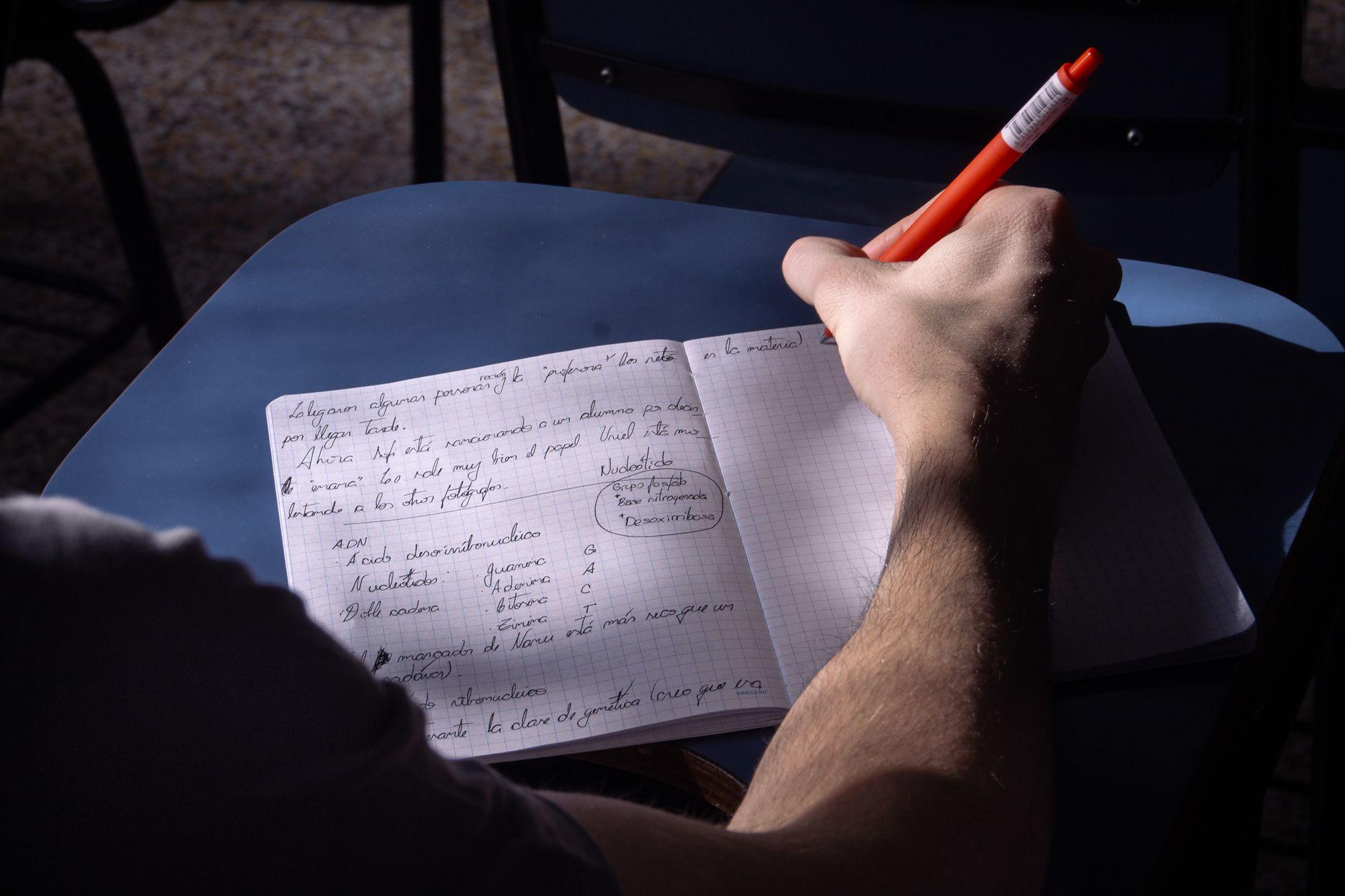
Paraphrasing is the act of taking someone else's idea and restating it in your own words and your own sentence structure, while still giving them credit for the idea. That last clause does a lot of work, and it is the part most students miss. Paraphrasing is not a trick for making borrowed text look original. It is a thinking skill. When you paraphrase well, you prove that you actually understood what you read, not just that you can shuffle words around.
This guide walks through what paraphrasing really involves, the techniques that hold up, the habits that quietly slide into plagiarism, and a few worked examples you can imitate. It is written for students who want to do this honestly, and for the teachers and parents trying to explain why it matters.
What paraphrasing actually is (and what it is not)
There are three ways to bring an outside source into your writing, and they are not interchangeable.
A quotation copies the source word for word and wraps it in quotation marks. You use it when the exact phrasing matters, or when the author said something so precisely that rewording would weaken it.
A summary compresses a long passage into a much shorter statement of its main point. A whole chapter might become two sentences.
A paraphrase restates a specific passage at roughly the same length, in completely new wording and structure. You use it when you want the substance of a point but the original phrasing is not worth preserving, or when you want your writing to read in one consistent voice instead of a patchwork of quotes.
The common thread is that all three require a citation. Paraphrasing changes the words, not the ownership of the idea. A flawless paraphrase with no citation is still plagiarism, because you are presenting someone else's thinking as your own.
How good paraphrasing works
The reliable method is almost embarrassingly simple, and it works because it forces real comprehension.
Read the passage, then look away. Cover the source. Close the tab. The single most important move in paraphrasing is to stop looking at the original while you write. If the source is in front of you, your brain will lean on its phrasing and you will end up nudging a few words around instead of rebuilding the sentence.
Say it out loud, like you are explaining it to a friend. If you can tell someone the idea in plain conversation, you understand it well enough to write it. If you stumble, you have found the part you did not actually grasp, and that is worth knowing before you commit it to a paper.
Write your version from memory. Then, and only then, go back to the source to check two things: that you got the meaning right, and that you did not accidentally reproduce its distinctive phrases.
Cite it. Add the attribution immediately, while you still remember where the idea came from. Citations bolted on later are the ones that go missing.
This loop, read, cover, restate, check, cite, is the whole engine. Everything else is refinement.
Techniques that change structure, not just words
Weak paraphrasing swaps individual words for synonyms and leaves the skeleton of the original intact. Strong paraphrasing rebuilds the skeleton. Here are the moves that actually do that.
Change the sentence's spine. Turn a long sentence into two short ones, or combine several short ones into a single sentence with a clear main clause. If the original leads with a cause and ends with an effect, lead with the effect.
Shift the grammar. Flip passive voice to active, or active to passive. Turn a noun-heavy phrase into a verb. "The implementation of the policy resulted in a reduction of absences" can become "When the school applied the policy, fewer students skipped class."
Reorder the information. Most passages present points in a sequence. If the logic still holds, present them in a different order. This alone breaks up the original's rhythm.
Use your own framing. Decide what the point means in the context of your argument, and lead with that. Your paraphrase should sound like it belongs to your paper, not like a guest paragraph wearing a disguise.
Notice that none of these are about synonyms. Replacing "big" with "large" and "study" with "research" is the laziest version of paraphrasing and the easiest one for both teachers and detection software to catch.
A worked example
Here is a source sentence:
"Frequent low-stakes quizzing improves long-term retention because the act of retrieving information strengthens memory more than rereading does."
A bad paraphrase (synonym swapping, same structure):
Regular low-stakes testing boosts long-term recall because the act of retrieving facts strengthens memory more than rereading does.
That is plagiarism with a thesaurus. The structure is identical and whole phrases survive untouched.
A good paraphrase:
Students remember material longer when they are quizzed on it often, even informally. Pulling an answer out of memory turns out to do more for retention than simply reading the material again (Author, Year).
The meaning is intact, the wording is new, the sentence has been split and reordered, and the idea is credited. That is the standard you are aiming for.
The patterns that quietly become plagiarism
Most paraphrasing problems are not deliberate cheating. They are honest writers using a weak method. Watch for these.
Patchwriting. This is the most common offense: you keep the source's sentence in front of you and replace some words while preserving its structure and key phrases. It feels like writing. It reads like copying. The fix is the cover-the-source step.
The half-citation. You cite the source but the wording stays so close to the original that the citation does not save you. A citation tells the reader where an idea came from; it does not give you permission to reuse phrasing. Close wording needs quotation marks, not just a parenthetical.
Mosaic plagiarism. Stitching together paraphrased fragments from several sources with no original connective thinking of your own. Even if each piece is cited, a paper that is nothing but other people's points in your handwriting is not your work.
Citation drift. You paraphrase a paragraph, cite it once at the end, and the reader cannot tell which sentences came from the source and which are yours. Make the boundaries clear with signal phrases like "Researchers found that..." so attribution is unambiguous.
Where AI paraphrasing tools fit, and where they do not
Spinners and "paraphrasing tools" promise to rewrite text for you. For ethical writing, they are mostly a trap. A tool that rewords a source you did not understand produces exactly the problem paraphrasing is supposed to prevent: text that passes through your document without passing through your head. You learned nothing, and you still owe a citation you probably did not add.
There is a narrower, legitimate use: running your own already-written sentence through a tool to see an alternative phrasing when you are stuck, then rewriting it yourself. But if the tool is processing someone else's text and the output goes straight into your paper, you have automated plagiarism, not avoided it. Many schools now treat undisclosed tool-spun text the same way they treat any other academic dishonesty, and detection systems increasingly flag the uniform, slightly-off phrasing these tools produce.
Frequently asked questions
How different does a paraphrase have to be? Different enough that someone reading both could not point to a shared phrase and say "you took that." New structure, new wording, same meaning.
Do I still cite if I changed every word? Yes. The words were never the issue. The idea is borrowed, so the idea gets credited.
Can common knowledge be paraphrased without a citation? Genuinely common facts (water boils at 100 degrees Celsius at sea level) do not need a citation. Specific findings, statistics, arguments, and anyone's particular interpretation do.
What if the original is just better written than anything I can manage? Then quote it. That is what quotation is for. Forcing a paraphrase of a perfect sentence usually makes it worse and riskier.
The one habit worth keeping
If you remember nothing else: close the source before you write. Almost every paraphrasing failure traces back to writing with the original in view. Read it, understand it well enough to explain it to a friend, look away, write your version, then check it and cite it. That single habit turns paraphrasing from a plagiarism risk into proof that you actually learned something. Which, after all, is the entire point of the assignment.