
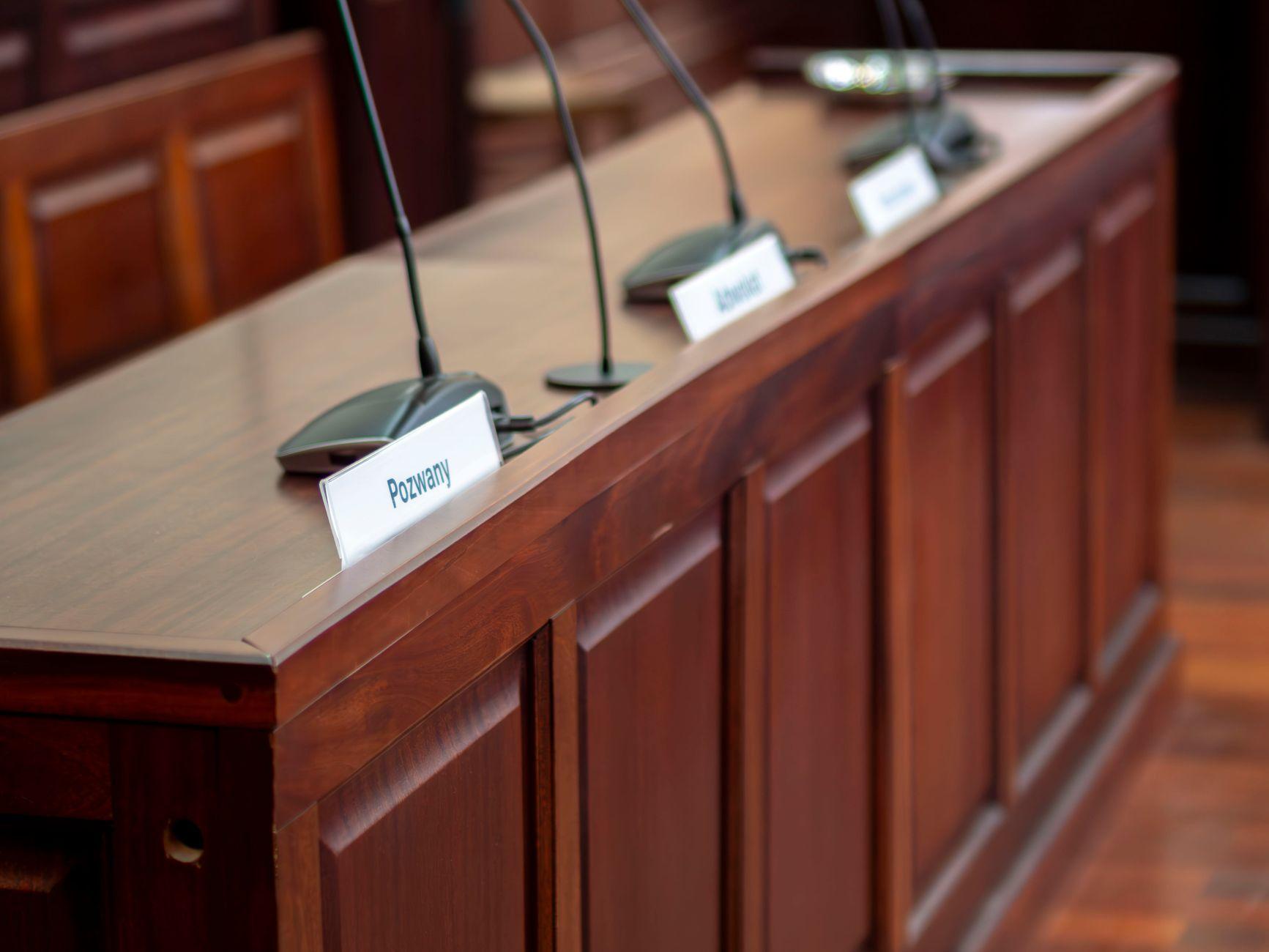
Every few years a song you love ends up in a courtroom. A jury that mostly cannot read sheet music sits down to decide whether a melody was borrowed or stolen, whether a groove belongs to one artist or to the air everyone breathes. The verdicts make headlines, the damages run into the millions, and somewhere a music teacher pulls up the two tracks on a phone and says to a room of teenagers, "Okay. You tell me. Is this the same song?"
That question turns out to be a surprisingly good way to talk about originality, and not just in music class. The list of famous music plagiarism cases is easy to rattle off, and plenty of blogs do exactly that. What is more interesting is what those cases get wrong, what they get right, and why the same arguments show up every time a student insists their essay just happens to sound like the top Google result.
The cases everyone cites, briefly
You know the highlights. George Harrison was found to have "subconsciously" copied the Chiffons' "He's So Fine" when he wrote "My Sweet Lord," a ruling that gave the world the phrase "subconscious plagiarism." The estate of Marvin Gaye won a jury verdict against Robin Thicke and Pharrell Williams over "Blurred Lines," arguing it copied the feel of "Got to Give It Up." Led Zeppelin spent years defending the opening of "Stairway to Heaven" against a band called Spirit, and eventually won. Vanilla Ice lifted the bassline of Queen and David Bowie's "Under Pressure" and pretended, badly, that it was different. Sam Smith handed songwriting credit to Tom Petty after people noticed "Stay With Me" shared a backbone with "I Won't Back Down."
These are good stories. They are also where most coverage stops, which is a shame, because the verdicts contradict each other in ways that are the whole point.
The cases disagree with each other
Here is the uncomfortable part. The "Blurred Lines" verdict and the "Stairway to Heaven" verdict cannot both be describing the same rule. In one, a jury decided that copying a vibe, a groove, an era, was enough to lose. In the other, courts decided that a common chord progression and a familiar descending line were not protectable, because if they were, you would be handing one band ownership of building blocks that belong to everyone.
Musicians panicked after "Blurred Lines," and they were right to. There are only twelve notes. Pop music runs on a handful of chord progressions that have been recycled since before recorded sound existed. If the standard for infringement is "it gives me the same feeling," then almost every song is guilty and the only winners are whoever sues first. If the standard is "an identical sequence of specific, non-generic notes," then you protect real theft without freezing the entire art form.
The law has spent a century wobbling between those two poles, and it has never fully landed. That is not a flaw in the storytelling. That is the actual condition of creative work, and students live inside it every day.
Influence is not theft, and that matters in the classroom
Every songwriter learned by copying. They played other people's songs in a garage, absorbed a thousand hooks, and eventually produced something that carried fingerprints of everything they had ever heard. We do not call that plagiarism. We call it an education.
The same is true of writing. A student who reads widely will start to sound like the things they read. A kid who falls in love with a particular essayist will, for a while, write in that essayist's cadence. That is not a violation. That is how a voice gets built, by trying on borrowed ones until your own shows through. The danger is not influence. The danger is the moment influence stops being metabolized and becomes a copy and paste, the moment a student stops writing through what they read and starts writing out of it, word for word, claiming it as their own thought.
Music makes this distinction teachable because it is audible. You can play "Under Pressure" and then "Ice Ice Baby" and a room of fourteen year olds will hear the difference between homage and lift without needing a single citation rule explained. Then you can play two songs that merely share a chord progression, and they will hear that this is just how music works. Once they can hear the line, they can start to see it in their own paragraphs.
Why "subconscious plagiarism" is the most honest idea on the list
The George Harrison ruling is the one worth lingering on. The court did not decide he was a thief. It decided he had genuinely forgotten that the melody already existed, that it had lodged in his memory and resurfaced years later feeling brand new. He believed he wrote it. He was also, legally, copying.
This is the scenario that should worry educators far more than the brazen cheater, because it is so much more common and so much harder to police. A student reads a striking phrase, forgets where, and produces it weeks later in an essay convinced it is their own. A detection tool flags it. The student is genuinely baffled and genuinely not lying. Harrison's case tells us this is real, it happens to professionals at the top of their craft, and the answer is not to brand the person a fraud. The answer is to build habits, taking notes that mark what came from where, that keep the borrowed and the original from blurring in the first place.
A good plagiarism check is not a lie detector. It is a memory aid, a way of catching the overlap that nobody intended, the way a producer might run a new track past a lawyer before release. Used like that, the flag is the start of a conversation, not the end of one.
What this should change about how we talk to students
The music cases give us a vocabulary that is more honest than the one most schools use. Instead of "plagiarism bad, original good," which collapses the moment a student notices that nothing is fully original, we can offer the distinctions the courtroom actually wrestles with.
There is the building block, the chord progression, the common fact, the standard phrase, that nobody owns and everybody uses. There is influence, the absorbed style that legitimately reshapes your own work. There is the credited borrow, the sample cleared, the quote cited, where you took something on purpose and said so. And there is the lift, the uncredited copy passed off as yours, which is the only one of the four that is actually a problem.
Students get accused of the fourth when they are really doing the first three, and they cheat by hiding the fourth behind the language of the first three. Teaching them to tell these apart, out loud, with songs they already love, does more than any honor-code paragraph ever has.
The closing line
There are only twelve notes and twenty six letters, and the whole question of originality lives in what you do with the overlap. Teach students to hear that difference, and you have taught them something no detector ever could.