
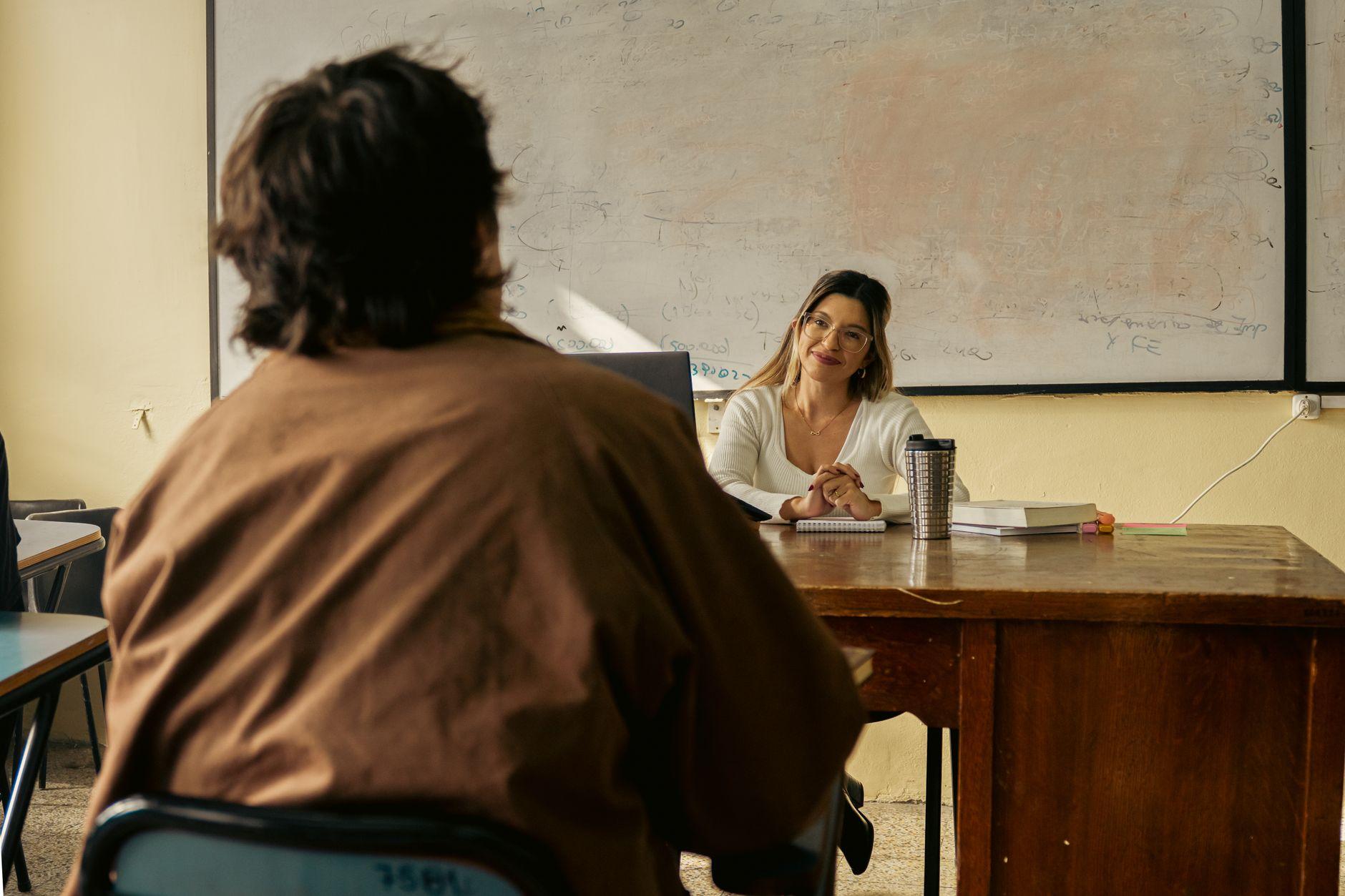
Search for "ethical issues in education" and you will get the same tidy list every time. Grading bias. Cheating. Equity. Privacy. Favoritism. Each one gets a paragraph that says, in effect, be fair and try hard. It is all true and almost none of it helps, because the hard part of ethics in a school is never the principle. It is the Tuesday afternoon when two principles you believe in point in opposite directions and you have about forty seconds to choose.
This piece is about those forty seconds. Not the abstractions, but the specific, recurring gray zones where good teachers genuinely disagree, and what it looks like to handle them with both fairness and nerve.
When kindness and fairness pull apart
A student turns work in late. Again. You know the backstory: a parent in the hospital, a job that runs until midnight, a kid who is holding more than any fifteen-year-old should. The rubric says minus ten percent per day. Your conscience says this kid is drowning and the rubric is the last thing they need.
Here is the trap. If you quietly waive the penalty for the student whose story you happen to know, you have just made fairness depend on which students confide in you. The confident kids, the ones with parents who email, the ones who are comfortable explaining themselves to adults, will get more grace than the quiet kid in the back whose home is just as hard but who would never say so.
The practical move is to build the mercy into the system before you need it, not after. A built-in policy that everyone can use without telling you why is more ethical than a discretionary kindness you grant case by case. Two no-questions-asked extensions per semester. A floor on late penalties. A standing rule that anyone can ask for forty-eight hours. The point is not to be soft. It is to make sure your compassion is not accidentally rationed by who is good at asking for it.
The plagiarism case you are not sure about
You read a paragraph and something is off. The voice does not match the rest of the paper. The vocabulary jumps two grade levels for three sentences and then drops back down. Maybe it is copied. Maybe it is AI. Maybe the kid just had a good day, or got real help from a tutor, or finally read the assigned book.
This is one of the most ethically loaded moments in teaching, and it is loaded precisely because the cost of being wrong runs in both directions. Ignore real cheating and you are unfair to every student who did the work honestly. Accuse a student who actually wrote it and you have done something close to unforgivable: told a kid who tried that you do not believe them.
A detection score, whether for plagiarism or AI writing, is evidence, not a verdict. We build Checkmark to give teachers a signal, and the most important thing we can say about that signal is what it is not. It is not proof. The ethical practice is to treat a flag as the beginning of a conversation, not the end of one. Ask the student to walk you through their process. Look at their drafts and version history. Compare it to writing you have watched them do in class. A student who wrote the thing can almost always tell you how they got there. The conversation is the safeguard the algorithm cannot be.
Grading what you cannot help but feel
You will not grade the kid who argues with you all period the same way you grade the one who lights up when you teach. You want to believe you will. You will not, not without help, because nobody does. That is not a character flaw. It is how human attention works.
The ethical question is not whether you have bias. You do. It is whether you have built anything to catch it. Grade anonymously when you can, names covered, so you are reacting to the work and not the kid attached to it. Use a rubric you wrote before you read a single paper, so you are measuring against a fixed standard instead of against the last essay in the stack. Spot check: pull three papers you already graded and regrade them blind a week later. If the scores move, your rubric is doing less work than your mood.
The teachers I trust most are not the ones who claim to be objective. They are the ones who assume they are not, and then design around it.
Privacy in a building that runs on stories
Schools run on information about children, and most of it is shared with the best intentions. A teacher mentions in the lounge that a student is going through a divorce so colleagues will go easy. A counselor's note gets forwarded to one more person than it should. A well-meaning email about a struggling kid lands in an inbox that did not need it.
The rule of thumb that actually works in a busy building: share on a need-to-do-something basis, not a good-to-know basis. Does this person need this fact to help this child right now? If yes, share it. If the honest answer is that it is just interesting, or makes the conversation flow, keep it. Children have a right to walk into a classroom without their hardest private moment having arrived first. The fact that the gossip is sympathetic does not make it theirs to spread.
The same logic governs the data we collect through devices and software. Every dashboard, every monitoring tool, every score is a little dossier on a child. The question to keep asking is not can we see this but do we need to, and who else can.
The pressure to look better than the truth
Some of the most common ethical pressure in education does not come from students at all. It comes from above. Inflate the grade so the parent stops calling. Round the class average up before it goes in the report. Quietly steer the struggling kid away from the test that would drag the school's numbers down. Pass the senior who did not earn it because holding them back is more paperwork than anyone wants.
These are not dramatic acts of corruption. They are small, reasonable-sounding compromises, and they are corrosive exactly because they are small. Each one teaches students that the number matters more than the learning it is supposed to represent, and kids learn that lesson fast.
You will not win every one of these. Sometimes the institutional pressure is real and the cost of standing firm lands on you. But the line worth holding is this: a grade is a claim about what a student knows. When you change the grade without changing the knowing, you are not being generous. You are lying on a child's permanent record, and you are usually doing it to make an adult more comfortable.
How to actually decide in the moment
When you are stuck, three questions cut through most of it faster than any policy manual.
First: would I be comfortable explaining this decision out loud to the student, to their parent, and to my principal in the same room? Ethical choices survive daylight. The ones you want to keep quiet are telling you something.
Second: am I treating this kid the way I would treat the student I find most difficult? Fairness is easy with the children we like. It only counts under load.
Third: am I solving this for this one case, or building something that handles the next ten like it? One-off mercy feels good and scales into favoritism. Good systems are just compassion that does not depend on your mood that day.
None of this makes the forty seconds easy. Teaching is a moral job disguised as an academic one, and the dilemmas do not stop coming. But the goal was never to be a teacher who never faces hard calls. It is to be one who, when the hard call comes, has already decided what kind of teacher they are going to be.