
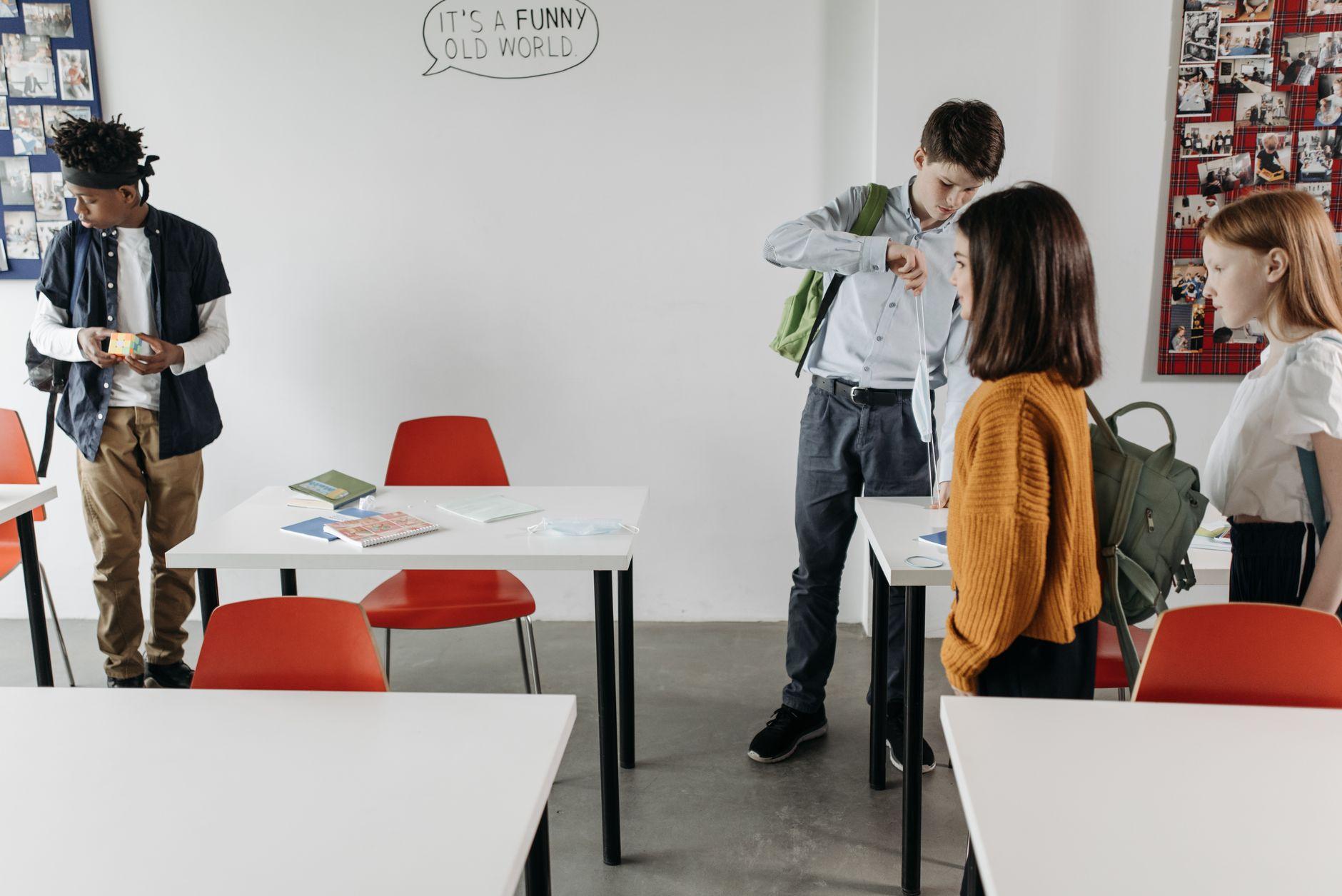
When ChatGPT arrived in late 2022, a lot of educators treated it like a fire alarm. Ban it, block it, fail anyone who touches it. Three years later, the alarm is still ringing, but most of us have stopped sprinting for the exits. We have had time to watch how students actually use the tool, how detection holds up under real conditions, and how the act of writing is quietly changing in front of us. This is a good moment to take stock honestly, without the panic and without the hype.
Here is the short version: ChatGPT is now ordinary. It is in the backpacks and browsers of a large share of students, it is genuinely useful, it is genuinely easy to abuse, and detecting it is messier than any vendor will tell you on a sales call. None of that is a reason to despair. It is a reason to get specific.
How students are actually using it
The cartoon version of AI cheating is a student typing "write my essay" and pasting the result. That happens. But it is not the most common or the most interesting thing going on.
What you see far more often is partial use. A student drafts a clumsy paragraph and asks ChatGPT to "make this sound smarter." Another uses it as a tireless tutor at eleven at night when no human is awake to explain comma splices. Someone else feeds it their notes and asks for an outline, then writes the essay themselves. A struggling reader pastes a dense primary source and asks for a plain-English summary so they can actually participate in class the next day.
These uses sit on a spectrum from clearly fine to clearly dishonest, and the line moves depending on the assignment. Asking AI to brainstorm thesis ideas is the modern equivalent of talking it over with a roommate. Asking it to produce the finished paragraphs you submit as your own is not. The problem is that both happen inside the same chat window, and from the outside they can produce similar-looking final drafts. Any honest conversation about ChatGPT in schools has to start by admitting that "using AI" is not one behavior. It is a dozen behaviors wearing the same coat.
Detection is real, but it is not a lie detector
Plenty of tools, ours included, can flag text that looks machine-generated. The underlying signals are real. AI writing tends to be statistically smooth in a way human writing usually is not. It favors certain rhythms, hedges in predictable places, and reaches for the same connective tissue over and over. Phrases like "it is important to note," "in today's fast-paced world," and "navigating the complexities of" show up so often that experienced teachers can smell them before any software weighs in.
But here is the part that gets lost in marketing copy. Detection produces a probability, not a verdict. A high AI score is strong evidence that something is worth a closer look. It is not, by itself, proof that a specific student cheated on a specific assignment. False positives exist. They tend to land hardest on the students who can least afford them, including non-native English writers whose careful, formulaic prose can read as machine-like to a model that learned "natural" from native speakers.
Detection also degrades when students edit. Run AI text through a paraphraser, swap a few words, add a personal anecdote, and the statistical fingerprint fades. This is not a flaw you can patch away. It is the natural result of an arms race where one side can regenerate its output infinitely for free. Treating a detection score as the end of an investigation rather than the beginning of one is the single most common mistake schools make, and it is the one most likely to end with a wrongly accused student.
What the tool changed about writing itself
Step back from cheating for a second, because the bigger story is quieter. ChatGPT changed the cost of a first draft. For most of history, getting words onto a blank page was the hardest, most frictional part of writing. That friction was annoying, but it was also where a lot of thinking happened. You figured out what you believed by struggling to say it.
When a competent draft is suddenly free and instant, that struggle becomes optional. Some students will skip it and lose the thinking that came with it. Others will use the free draft as scaffolding and spend their energy on revision, argument, and voice, which is arguably the more valuable work anyway. Both futures are live right now, often in the same classroom. The deciding factor is rarely the technology. It is whether the assignment rewards thinking or merely rewards a finished-looking product.
That is the uncomfortable lesson hiding inside the AI panic. A lot of school writing was already optimized for output over insight, and ChatGPT just made that optimization brutally efficient. If a chatbot can ace your essay prompt, the prompt may have been testing the wrong thing.
What actually works in response
The schools handling this well are not the ones with the strictest bans or the most aggressive detection settings. They are the ones that changed how they assign and assess. A few moves keep showing up.
Make the process visible. Ask for outlines, drafts, and revision histories, not just the final file. Process is much harder to fake than product, and it tells you more about learning anyway.
Move some writing back into the room. In-class writing, oral defenses of submitted work, and quick one-on-one conferences where a student explains their own argument cut through ambiguity faster than any score. A student who wrote their paper can talk about it. A student who did not, usually cannot.
Set clear, assignment-specific AI rules and put them in writing. "No AI ever" is unenforceable and a little dishonest, since we use these tools as adults constantly. "You may use AI to brainstorm and check grammar, but the drafting and final words must be yours, and you must disclose what you used" is a rule students can actually follow.
Treat detection as one input among several. A flag is a reason to have a conversation, look at the draft history, and ask the student to walk you through their work. It is not a courtroom exhibit.
The honest bottom line
Three years in, ChatGPT is neither the end of education nor a harmless gadget. It is a powerful, flawed, permanent feature of the landscape, and the students in front of us will use it for the rest of their lives. Our job is not to win an unwinnable detection arms race. It is to teach in a way that makes the thinking matter more than the typing, and to handle suspicion with enough care that we never trade one student's integrity for another's wrongful accusation.
The tools will keep changing. The goal does not have to. Teach the thinking, design assignments worth doing, and treat every AI flag as the start of a conversation rather than the end of one.